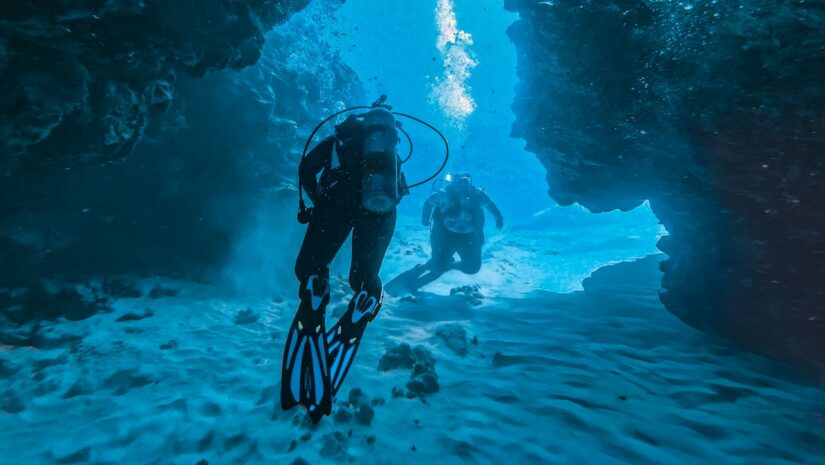
I did not grow up around the ocean, and I did not have a lifelong dream of becoming a diver. I got certified two years ago, in my late forties, because of a chain of things I did not fully understand at the time. This is how it actually happened, because I think more people my age would try it if they knew how incredibly cool diving is and how, no matter how scary TikTok makes clearing your mask seem, you can do it.
It started with my friend making me go to the pool
The winter I turned 46 was a hard one. I was depressed. Not for any specific reason, just the low dark drift some of us get when the daylight goes away. A swimmer friend of mine talked about how great it was in the winter, and another friend and I said we hated the gym. She got both of us to go with her the next week by promising the pool isn’t the gym. She was there to swim laps. My friend and I were there because she asked us to be.
We paddled in the shallow end. That was it. She swam laps for forty minutes, and we stood in the shallow end and talked and moved around a little. It was supposed to be a one-time thing to cheer us up. We went back less than a week later. Then, I’m pretty sure, the day after that. Somewhere in the middle of all that, I remembered how much I liked being in a pool.
Next thing I know, I’m buying a swim cap because my hair was in my face. Then I bought goggles because chlorine hurt my eyes. Then I bought a swimmer’s training snorkel so I could stay in the water longer without having to lift my head to breathe. (I do not care what people think about the snorkel. I am not trying to look like a swimmer. And I am trying to be underwater.)
Which turned out to be a clue about something.
Somebody said the word scuba
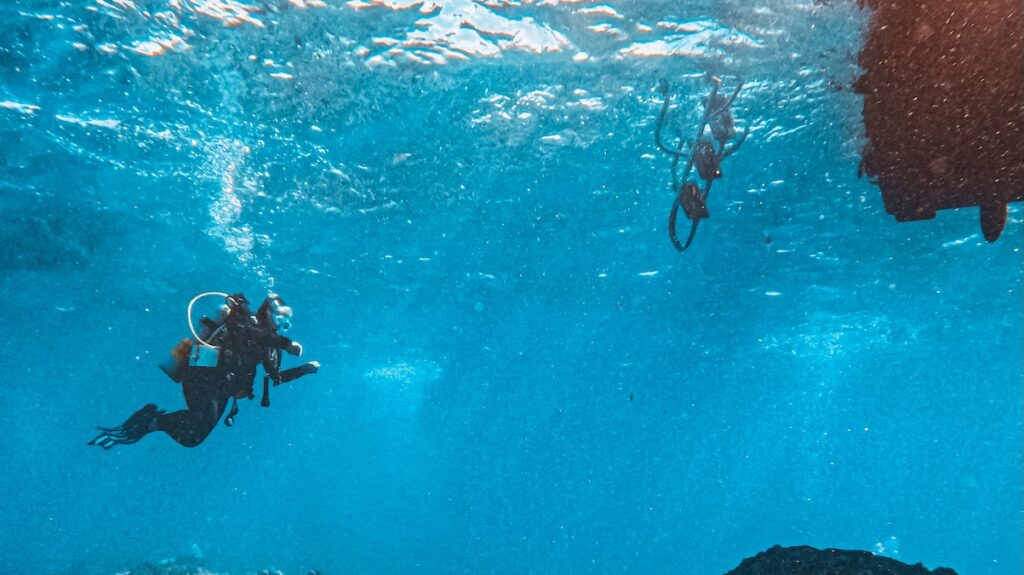
Once you have voluntarily bought a snorkel to wear at your local pool, someone in your life is going to point out that there is an entire activity built around being underwater on purpose. I do not remember who first said it to me. But by the time somebody said it, I had already been thinking about it because why have one simple hobby when you can expand it into something much more awesome?
I signed up for Open Water certification at Blue Water Divers in New Jersey less than six months after my first dip in that Jersey City winter pool.
Almost quitting during certification
I want to be honest about this part because I think a lot of people considering diving get here and quit.
The classroom portion was fine. The pool sessions were exciting. Then came open water checkouts, which for me meant Lake Hydra in Pennsylvania in fifty-degree water because my stubborn self didn’t want to wait and got certified in early spring. That means a full seven-mil wetsuit, hood, gloves, boots. You are exhausted from putting the gear on, and you have not even walked to the water yet – you don’t even get to fall off a boat at Lake Hydra; you walk from the parking lot.
Anyhow.
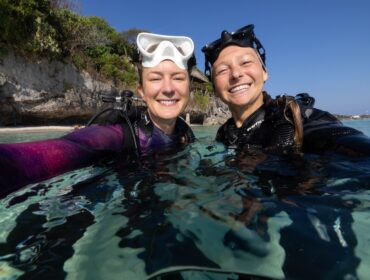
The part that almost broke me was mask removal and clearing. Taking my mask off underwater and putting it back on was the single skill I could not get past. I would panic every time. My instructor, who was one of the best teachers I have had in any context, had me practice in the shallows over and over until my body finally understood that I was not drowning; I was just taking off a piece of equipment.
She never rushed me. She never made me feel like I was holding the group up. And the group did not either. The other people in my checkout class were all in the same water going through their own versions of the same fear, and every single person cheered for every single skill anyone got past. We are still in a group text. It is awesome.
I finished the checkouts. I got my card. And Lake Hydra was the hardest thing I did in the entire process.
Kona in December
Two months after I got certified, I flew to Hawaii and did a night dive with manta rays off the Big Island. Thirty feet of water, warm this time, dive lights turned upward to attract plankton, mantas coming in over our heads to feed.
One of them came in low over me and brushed across my body as it passed. I felt it lift my hair. I did not have time to think anything before I saw it, and then I did see it, right above me, and it kept moving and disappeared into the dark. My hands forgot how to work a GoPro, and I’m pretty sure I cried.
I have manta rays tattooed on my ankle now. I do not ever want to forget what that felt like.
What has happened since
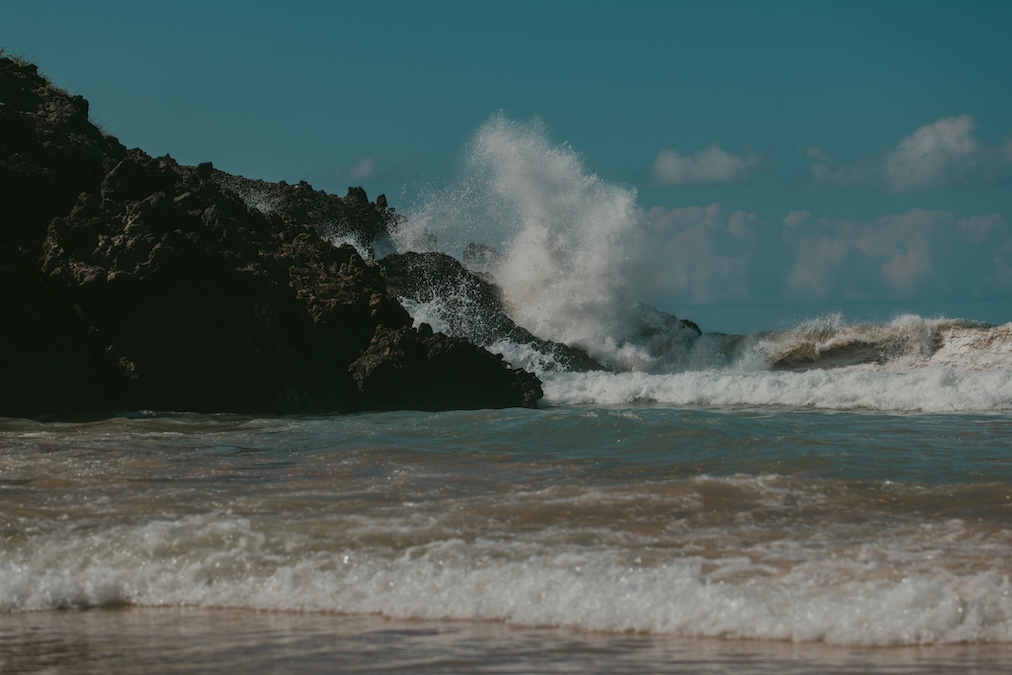
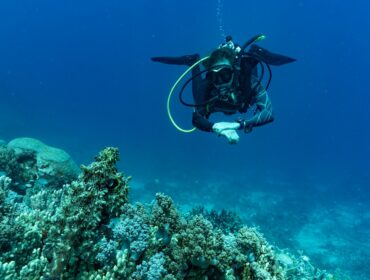
Since Kona, I have dived in Punta Mita and Puerto Vallarta and the Florida Keys. The Keys trips both included volunteer days with the Coral Restoration Foundation cleaning their nursery at Tavernier during Coralpalooza, which I highly recommend doing. The corals we maintain get transplanted onto the reef later. We were supposed to outplant on one of those days, and the chop was too rough for it, so CRF pivoted to a full day of reef education instead. That was the trip that changed the way I think about diving. I went in as somebody who wanted to see beautiful things. I came out as somebody who wanted to help protect them.
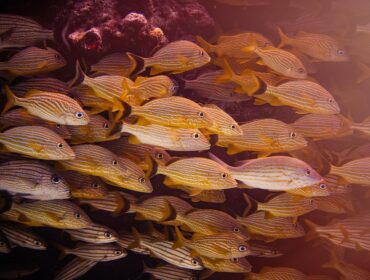
At Islamorada Dive Center, after one of the CRF trips, I did four dives in a single Saturday. Cracker Pocket, The Alley, The Maze, and The Aquarium. On the second descent, there was a nurse shark on the bottom. There is a thing they tell you in your certification about how sharks are almost always uninterested in divers, and you nod, and then one is right there in front of you, and your body has to decide whether to believe it. I was too in awe to be scared. Again, it was awesome.
The underwater photography piece
I have been a photographer on land for over twenty years, so when I started diving I wanted a camera in my hand almost immediately. I now shoot two setups depending on what the trip needs. A Canon PowerShot G7X in a Sea Frogs housing is my compact travel and volunteer rig. It is light, unobtrusive, and lets me focus on the dive rather than the camera. For serious photography, I use my Canon 5D in an Ikelite housing with either the RF 100mm macro lens for reef detail work or the 15-35mm wide-angle for the bigger scenes.
Underwater photography is not land photography with water added. Light behaves differently at depth, colors drop out in a predictable order starting with red, distance is deceptive, and buoyancy becomes the single most important skill because you cannot compose a shot if you are drifting or kicking. It is its own discipline, and I am still very much learning it. I love it so much because it’s a whole new skill, and I hope to never stop learning.
What is next
My dream dives are a Galapagos liveaboard first and foremost, then Raja Ampat, Cocos Island, the Red Sea, and Silfra in Iceland where you can dive between two tectonic plates in water so clear it does not look like water.
The Galapagos trip is the one I am actively working toward.
If you are thinking about starting
Here is what I would tell you:
You do not have to be athletic or young or in perfect shape. You do have to be willing to sit through a certification course and physically show up to your certification dives. Age is not the barrier people think it is. I started swimming at 46 and got certified at 47.
Your certification dives might be miserable. If you are in a cold-water region, the certification is going to be uncomfortable. That has nothing to do with what diving actually feels like once you are in warm water somewhere beautiful. Do not let the certification convince you that you do not like diving. You have not gone diving yet.
Once you are certified, dive. Do not let the card sit in a drawer. Skills fade fast, and the joy of the sport comes from being confident in the water, which only happens with time and repetition.
And whatever pulled you toward the water is worth listening to. For me it was standing in the shallow end of a pool three winters ago because my friend did not want to swim laps alone. That turned into cap and goggles. which turned into a snorkel, which then turned into a certification. And that turned into a manta ray experience. And that also turned into a tattoo. None of that was planned. I could not have predicted any of it. But if you had told me at 46 that this was what my late forties were going to look like, I would not have believed you.
Sometimes the thing you need most is the thing you never thought to try.