There is something unforgettable about locking eyes with a shark underwater. Whether it is a curious oceanic whitetip cruising through the blue or a schooling hammerhead gliding silently beneath you, these encounters have a way of changing how people think about sharks forever. Around the world, a handful of destinations have earned legendary status for reliable shark sightings. They give divers the opportunity to observe these incredible animals in their natural environment. Knowing where to go is only part of the adventure, though. Understanding shark behaviour can make every encounter safer, more enjoyable, and even more fascinating. Here are four of the world’s most spectacular shark diving destinations. Plus, what the sharks may be trying to tell you when you meet them.
Fuvahmulah, Maldives: Tiger Sharks (and Whale Sharks)
Few destinations rival Fuvahmulah when it comes to consistent tiger shark encounters. This isolated island in the southern Maldives built a world-famous reputation around its resident female tiger sharks, which divers spot year-round. Unlike destinations where tiger sharks only appear seasonally, this island offers remarkably reliable encounters.
The most famous dive site is Tiger Harbour, where divers descend to approximately 20-30 metres (66-100 feet) to observe these powerful predators cruising slowly along the reef edge. Water temperatures remain warm year-round, typically between 27-30°C (81-86°F), with visibility often exceeding 30 metres (100 feet).
Although tiger sharks steal the spotlight, Fuvahmulah also offers opportunities to see whale sharks, thresher sharks, silky sharks, grey reef sharks, whitetip reef sharks and occasional scalloped hammerheads. Whale sharks are most frequently encountered during the northeast monsoon from around November through April. However, sightings remain possible at other times.
Strong currents frequently sweep around the island, so this destination best suits experienced divers who hold an Advanced Open Water certification or equivalent experience in current diving. For safety reasons, operators generally do not offer tiger shark snorkeling. Local authorities heavily regulate freediving, which depends on real-time conditions and strict operator protocols.
Cabo Pulmo, Mexico: Bull Sharks
Located on the Baja California peninsula, Cabo Pulmo National Park is one of the world’s greatest marine conservation success stories. Decades of protection have transformed this once-overfished reef into a thriving ecosystem that attracts large numbers of sharks.
Bull sharks are among the most exciting visitors, particularly during the cooler months between November and March. The famous El Vencedor wreck and nearby offshore sites regularly attract these powerful sharks, although encounters can never be guaranteed.
Divers may also encounter silky sharks, blacktip sharks, whitetip reef sharks, whale sharks during the winter months, and the occasional hammerhead or mako in offshore waters.
Water temperatures vary considerably throughout the year, ranging from around 20°C (68°F) in winter to 29°C (84°F) during late summer. Visibility often reaches 20-30 metres (66-100 feet), and bull shark encounters typically occur between 18-30 metres (60-100 feet).
Advanced certification is recommended due to occasional currents and deeper profiles. However, many of the park’s reefs are suitable for less experienced divers. Strict marine park regulations prohibit touching wildlife or disturbing marine life, helping preserve the area’s exceptional biodiversity.
Galápagos Islands, Ecuador: Hammerhead Sharks
For many divers, swimming among hundreds of scalloped hammerheads represents the ultimate shark encounter. Nowhere offers this spectacle quite like the Galápagos Islands.
The legendary dive sites Darwin’s Arch and Wolf Island consistently produce schooling hammerheads. Particularly between June and November when cooler, nutrient-rich currents bring abundant marine life. Schools numbering in the hundreds may circle cleaning stations while divers remain stationary and observe from a respectful distance.
Galápagos is also famous for Galápagos sharks, silky sharks, whale sharks (particularly large pregnant females later in the season), blacktip sharks, whitetip reef sharks and occasional tiger sharks.
Conditions can be demanding. Water temperatures range from approximately 18-26°C (64-79°F), depending on the season and location. Strong currents, surge and changing conditions are common, while dive depths frequently reach 20-35 metres (66-115 feet).
This is considered an advanced diving destination. Divers should be comfortable with negative entries, current diving and blue-water ascents. Snorkelling opportunities with sharks exist in some sheltered areas. However, the iconic schooling hammerhead dives are reserved for scuba divers due to the depths involved.
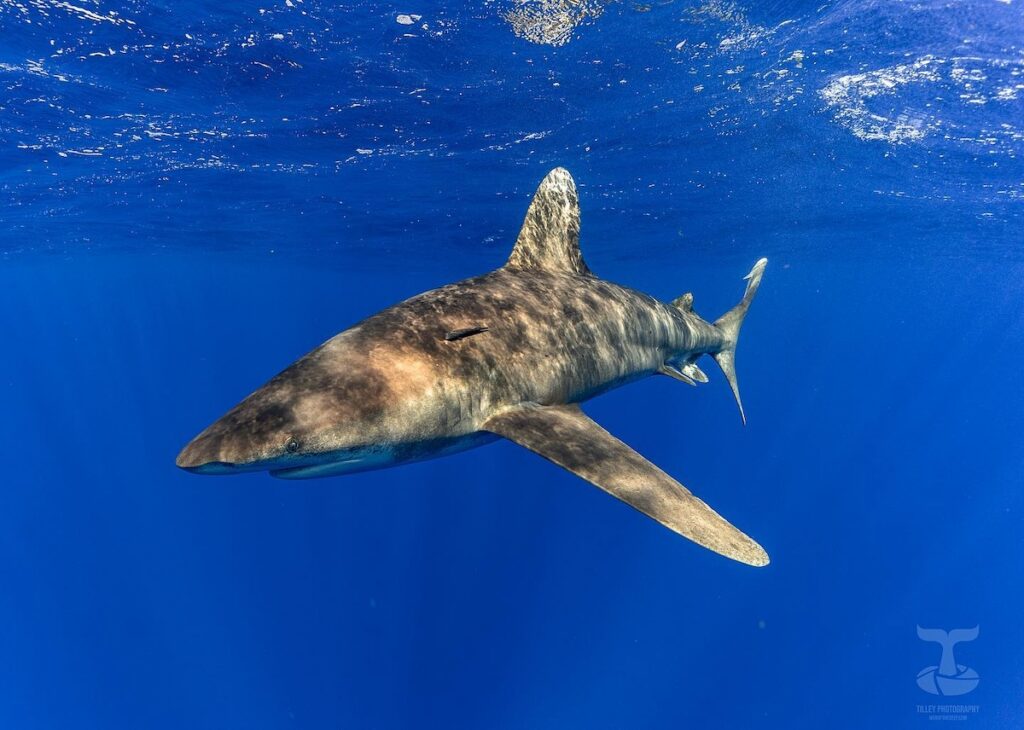
Hurghada, Egypt: Oceanic Whitetip Sharks
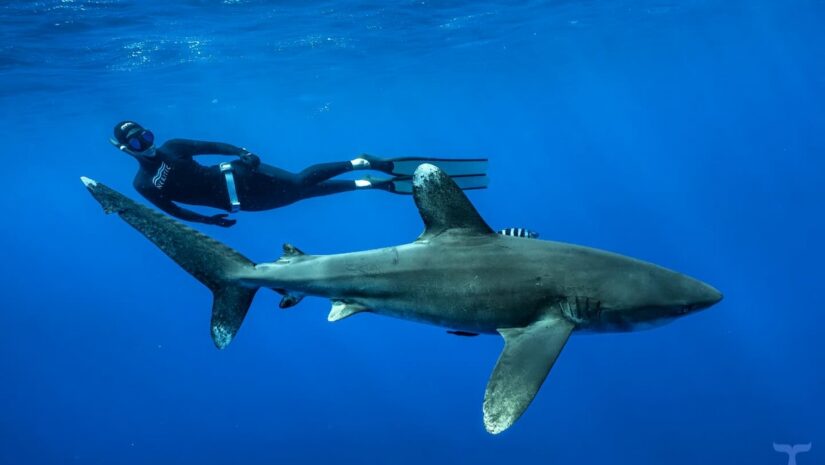
The northern Red Sea offers exceptional reef diving, but for encounters with oceanic whitetip sharks, many divers head further offshore from Hurghada to the Brothers Islands, Daedalus Reef and Elphinstone Reef. These sites are among the best places in the world to observe one of the ocean’s most charismatic pelagic sharks.
Oceanic whitetips are most commonly encountered between October and December, when water temperatures remain pleasantly warm at around 24-28°C (75-82°F). Divers often spot them cruising effortlessly in open water, sometimes approaching with obvious curiosity before continuing on their way.
The region is also home to scalloped hammerheads, thresher sharks, grey reef sharks, silky sharks, whitetip reef sharks and occasional tiger sharks.
Most encounters occur between 10-40 metres (33-130 feet), often during blue-water safety stops or while drifting alongside offshore reefs. Strong currents and exposed conditions mean these dives are generally recommended for Advanced Open Water divers with experience in drift diving. Many offshore sites also have minimum logged dive requirements before divers are permitted to join.
Understanding Shark Behavior: What Are They Telling You?
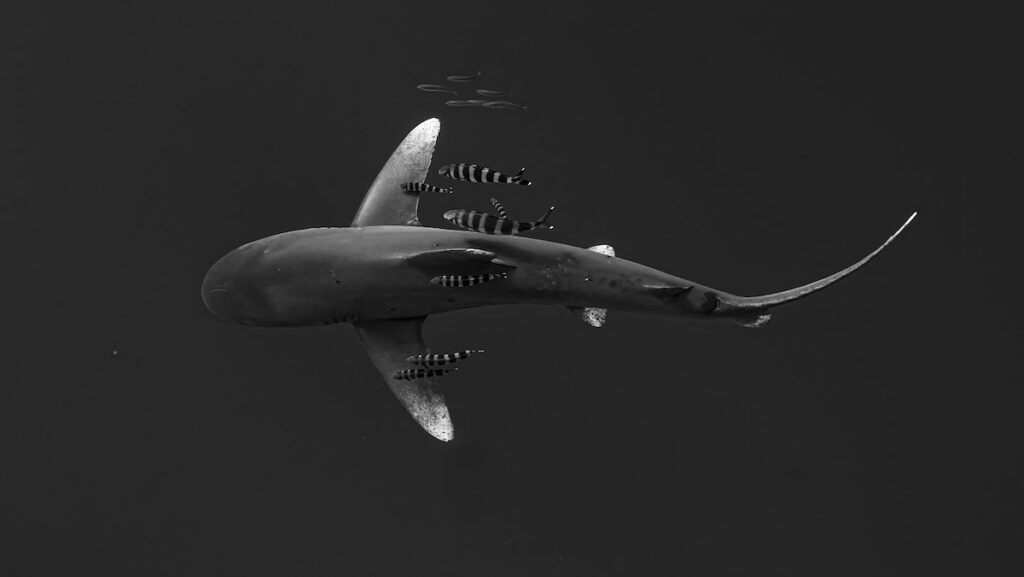
One of the biggest misconceptions about sharks is that every approach signals aggression. In reality, sharks constantly communicate through their body language, and learning to recognise these signals helps divers understand what they are seeing.
A relaxed shark usually swims with smooth, steady movements, gently sweeping its tail from side to side while maintaining a predictable path. Curious sharks may make wide circles around divers, briefly approach before turning away, or pass several times to investigate something unfamiliar. This behaviour is perfectly normal and often indicates simple curiosity rather than any intention to attack.
If a shark becomes agitated, its body language changes noticeably. Rapid or exaggerated swimming, stiff body posture, lowered pectoral fins, an arched back, tighter circling or sudden changes in direction can all suggest the shark is becoming stressed or defensive. Sharks feeding naturally may also display quicker, more purposeful movements as they focus on prey rather than their surroundings.
Divers can reduce risk by remaining calm, avoiding frantic movements or splashing, staying aware of their surroundings and keeping the shark in sight whenever possible. Giving sharks plenty of personal space, avoiding attempts to touch or chase them, and following guidance from experienced dive professionals all help ensure encounters remain positive. It is also wise to avoid wearing or carrying freshly speared fish, which may naturally attract curious predators.
Despite their reputation, sharks are not mindless killing machines. Millions of people enter the ocean every year, and shark bites remain exceptionally rare. At the same time, wild animals deserve respect, and no interaction with wildlife is completely without risk. By understanding shark behaviour and behaving responsibly underwater, divers can safely enjoy some of the most awe-inspiring encounters the ocean has to offer while developing an even greater appreciation for these remarkable apex predators.