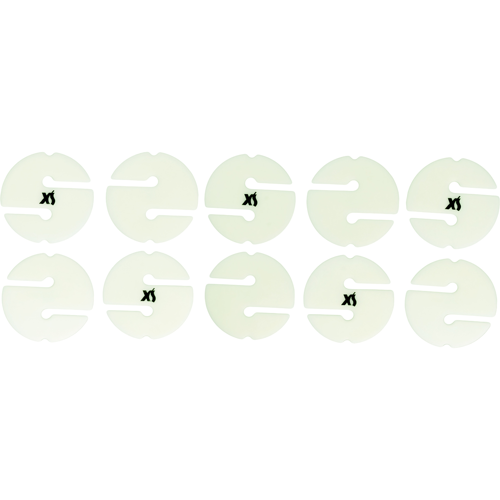
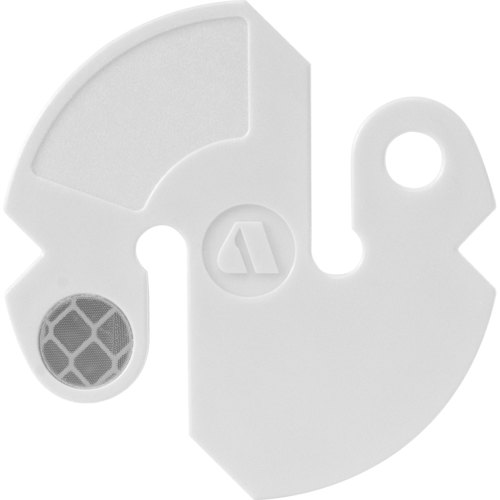
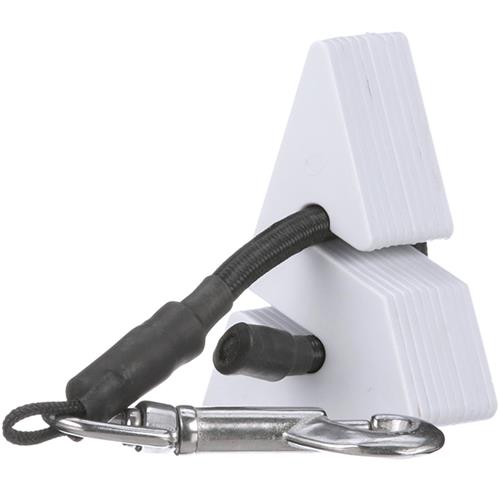
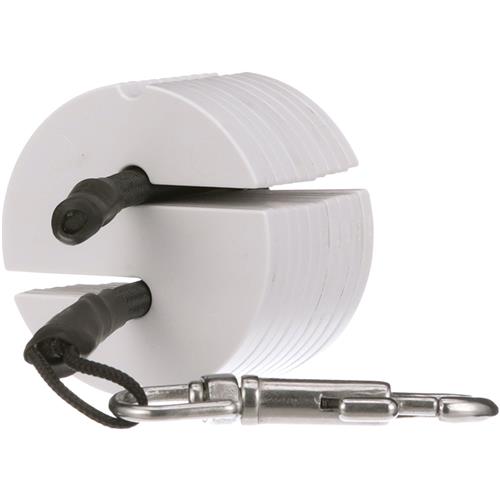
Diving non directional markers, often referred to as “cookies” within the cave and technical diving communities, play a crucial role in underwater navigation and team safety. These small, circular discs are designed to snap securely onto a guideline, providing a durable and unmistakable reference point for divers traversing complex underwater environments such as caves, wrecks, or deep technical routes. Unlike directional markers or arrows, diving markers of this type do not indicate which way to exit, but instead serve as personalized identifiers—each diver or team may use uniquely marked or color-coded cookies to denote their passage or to flag important locations along the line. This system helps teams avoid confusion at intersections, junctions, or points where multiple guidelines converge, especially in challenging conditions of low visibility or during high-stress scenarios where clarity and rapid recognition are vital. For those preparing for spring cave diving trips or gearing up for advanced training in the cooler months of late winter and early spring, having a reliable set of non directional markers is as essential as carrying a backup light or reel.
Selecting the right diving non directional markers involves more than just picking a handful of plastic discs. Experienced divers often personalize their cookies with initials, unique colors, or tactile markings, ensuring they can be identified by touch alone when visibility is compromised. Durability is key—modern cookies are typically constructed from robust plastics designed to withstand repeated use and the rigors of technical environments, a significant evolution from the early days when wooden clothespins were the standard. Whether you’re a seasoned cave diver mapping unexplored passages, a technical diver marking jump or gap lines for a team traverse, or an instructor teaching students the fundamentals of guideline management, these markers are indispensable tools. They’re also a thoughtful gift for any diver advancing into technical or cave specialties, symbolizing both the practical and personal aspects of the journey. The act of snapping your own marker onto a line is a rite of passage, a quiet moment of ownership in the vast, silent world beneath the surface.
Proper use and etiquette are important with diving markers. Teams are careful to remove their cookies on the exit, preventing confusion for those who follow and maintaining the clarity of the guideline system for everyone’s safety. This practice is especially relevant in popular cave systems or during busy dive weekends, when multiple groups may be sharing the same routes. As the community continues to evolve, so do the designs and materials of these essential markers, with innovations focusing on improved grip, visibility, and ease of use even with thick gloves in cold water. If you’re looking to expand your kit or introduce a fellow diver to the world of technical diving, exploring the full range of options available can be both educational and inspiring. For a broader selection and more information on the different types of line markers—including arrows, non directional markers, and other specialty designs—visit our
Technical Diving Line Markers page. Equipping yourself with the right markers is not just about following protocol; it’s about embracing the discipline, camaraderie, and attention to detail that define safe and successful technical diving.