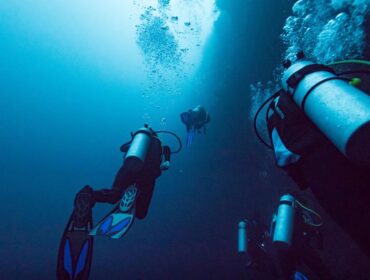
Located 20 miles south of San Diego, in Mexican waters, lie the remote group of 4 islands known as Los Coronados. These islands are one of the most popular dive locations on the West Coast, as they offer conditions similar to those found in the Caribbean. Situated 6 miles off the Mexican coast, these islands are right on the edge of the continental shelf and are in very close proximity to deep, productive oceanic currents. The currents routinely wash the islands with clean blue water, with visibility often exceeding 80 ft, making it a dream to dive.
The islands also called the ‘Nods’ are home to large sea lion and harbor seal colonies. They are pretty used to divers, so you can expect to be diving with them on your dives here. Most of the diving at the Nods is done on the lee side of the islands, so the water is protected from the oncoming swells. Depth ranges from 20 0 to 120 0 feet, perfect for all diving levels.
The North Island is known for its most dramatic diving of the three Los Coronados Islands. With excellent visibility, the sites feature steep drop-offs and large boulders, along with plenty of pelagic sea life. Popular dive sites near the North Island include “The Keyhole”, “Seal Cove”, “Moonlight Cove”, and “Lobster Shack”. Scuba diving the Keyhole, though, is subject to the conditions prevailing at the time, as there can be strong currents. On some days, the wind and waves crashing through the ‘keyhole’ make it undiveable. This island, however, is where you are most likely to encounter the ever-playful and curious California sea lion. So, between the breathtaking natural beauty of these islands topside and the gorgeous underwater fields of purple hydrocoral and the marine life on offer, these sites are well worth fighting the strong open ocean currents for a viewing.
Moving south towards the other two islands named ‘Oscar Rock’ and ‘Genoa’, they too offer numerous dive sites. Some of the dive sites here feature fallen boulders that have formed small, cave-like structures, and over the years, they have accumulated and grown beautiful sea fans encrusted with oysters. They also have a wreck dive site of a 90’s motor yacht, which is showing signs of new life with an influx of giant black sea bass making it their favorite haunt.
Further south is the largest island, known as the ‘South Island’. It is shallower than the North Island and is popular for its rocky reefs. The marine life is drawn to it, as its sandy surroundings make it a little oasis for the fish. You can spot different types of sea bass, vast schools of barracuda, as well as the rare trigger fish that are unusual in these parts. What’s more is that this island is home to the Northern Elephant Seals. Just South of the island is an all-year-round kelp bed called ‘South Kelp Ridge’. With stunning visibility, it makes for an exciting dive site. It has a rocky bottom and, in a sense, a kelp garden, making it the perfect habitat for numerous species of rockfish and other marine life.
With its numerous and varied dive sites and exceptional visibility not found elsewhere along this coastline, Los Coronados is a great dive destination, often experienced on overnight live-aboard trips out of San Diego.