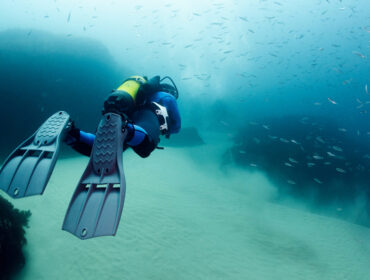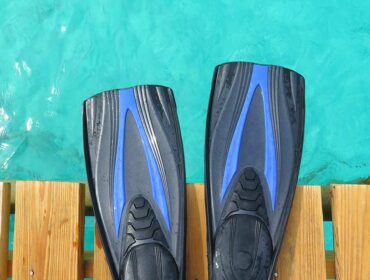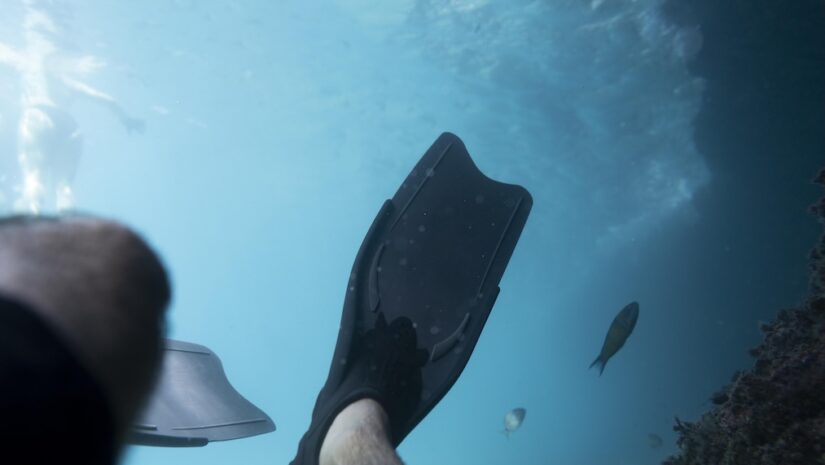
When you think of scuba gear, a mask and tank probably come to mind first. But there’s one piece of equipment that directly affects your energy, control, and comfort underwater: your fins. In this guide, we’ll walk through the different types of fins, explain their pros and cons, and help you decide which pair fits your diving style.
Why Fins Are Essential for Diving
Swimming with a scuba tank, weights, and other gear creates drag. Without fins, you’d tire out quickly. The right fins act as extensions of your legs, giving you:
- Thrust to move efficiently.
- Energy savings to conserve air and reduce fatigue.
- Control in strong currents or tight spaces.
- Precision for skills like hovering, turning, or back-kicking.
Good fins don’t just help you move faster—they make your entire dive safer and more enjoyable.
Types of Scuba Fins
Let’s look at the most common types of fins divers use today.
Full-Foot Fins
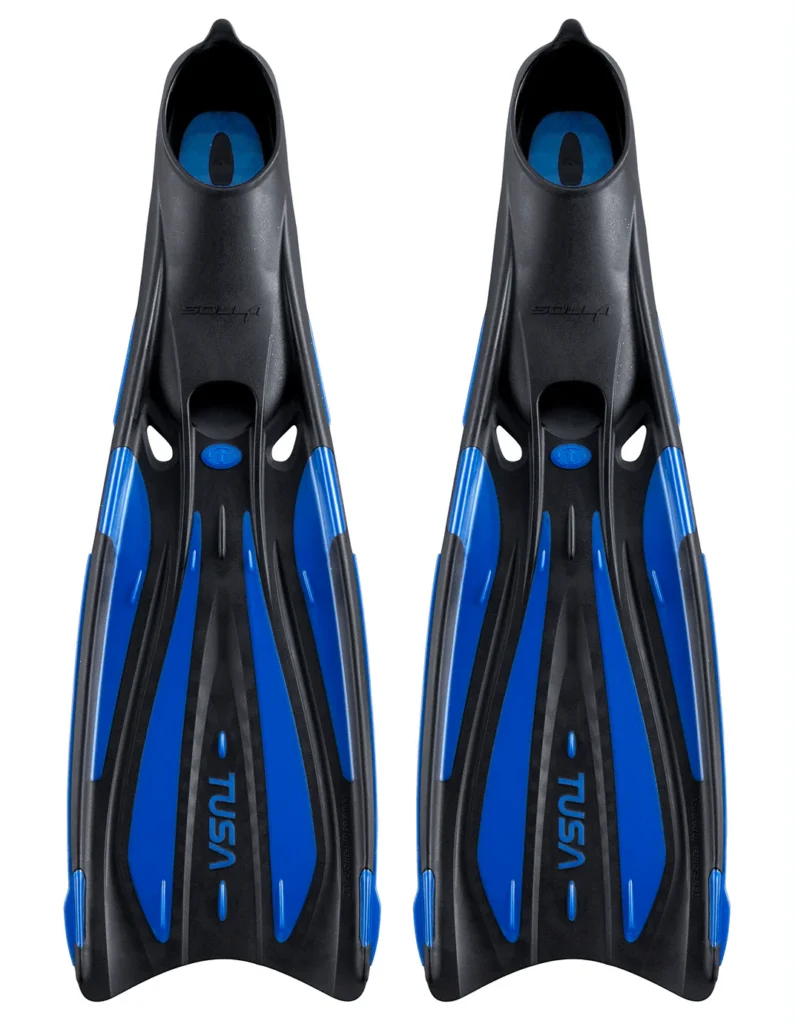
- Design: A closed heel pocket you slip your bare foot into.
- Best for: Warm tropical waters and boat dives.
- Pros: Lightweight, compact, no need for boots. Perfect for travel.
- Cons: Limited protection, not suitable for cold water or rocky shore entries.
Recommended Gear:
- Mares Avanti Superchannel Full-Foot Fins – Comfortable and efficient for warm-water dives.
- Cressi Reaction Pro Full-Foot Fins – Lightweight, durable, and easy to pack.
Open-Heel Fins
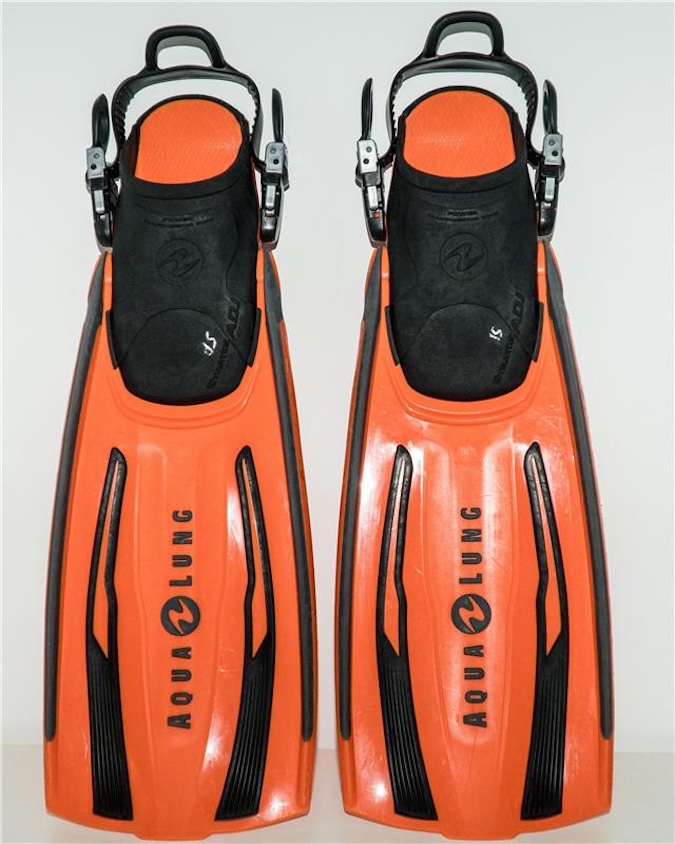
- Design: Adjustable strap at the heel, worn with neoprene boots.
- Best for: Cold water, shore dives, or rough terrain.
- Pros: Versatile, durable, customizable fit with boots. Keeps feet warm in colder conditions.
- Cons: Bulkier than full-foot fins, requires boots (extra cost and gear).
Recommended Gear:
- Scubapro Seawing Nova Open-Heel Fins – Blend of power and efficiency with a futuristic design.
- Aqua Lung Express ADJ Open-Heel Fins – Adjustable, sturdy, and reliable for all conditions.
Paddle Fins
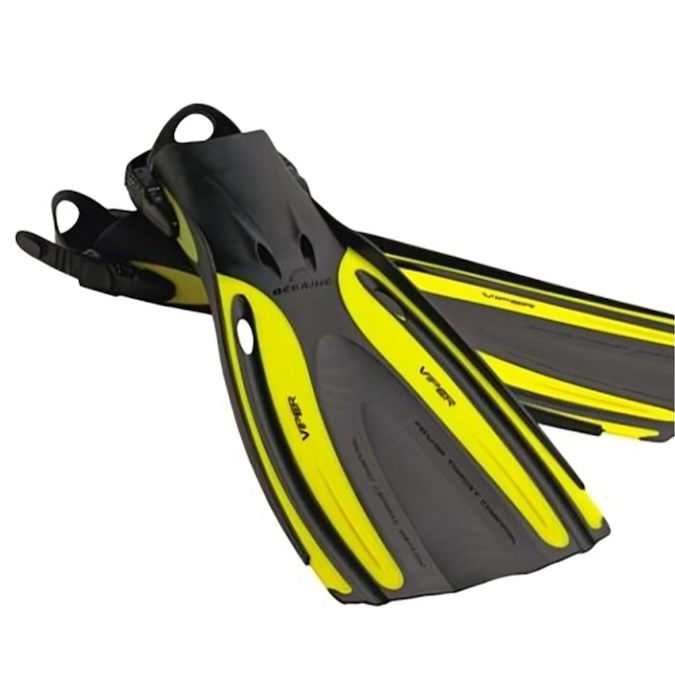
- Design: Flat, traditional blade.
- Best for: General recreational diving.
- Pros: Affordable, strong thrust, widely available.
- Cons: Requires more leg power than split fins.
Recommended Gear:
- TUSA Solla Paddle Fins – Known for solid thrust and responsive performance.
- Cressi Frog Plus Fins – Balanced design for recreational divers.
Split Fins
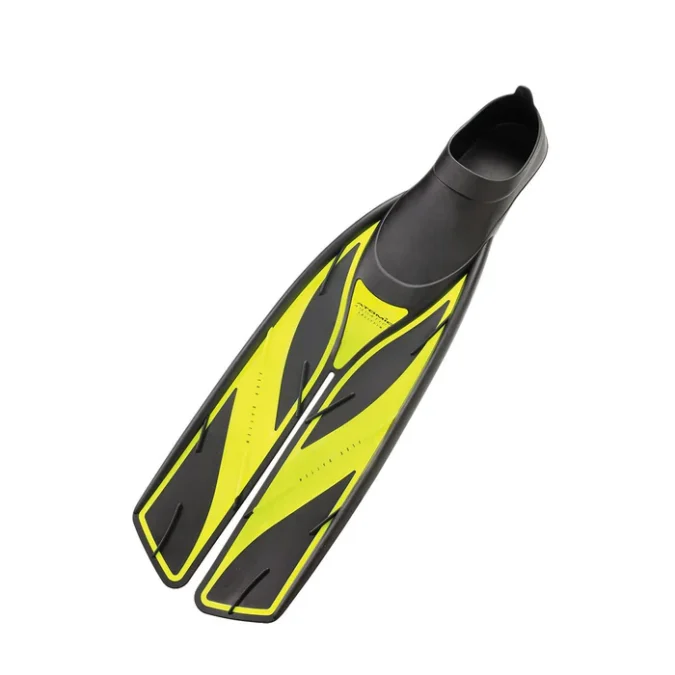
- Design: Blade split down the middle, reducing drag.
- Best for: Long dives, divers with knee or joint concerns.
- Pros: Energy-efficient, easy flutter kicks, reduce strain.
- Cons: Less powerful in strong currents, not ideal for technical dives.
Recommended Gear:
- Atomic Aquatics Split Fins – High-performance split fins designed for effortless kicking.
- Apollo Bio-Fins Pro – A favorite among divers for comfort and reduced leg fatigue.
Travel Fins
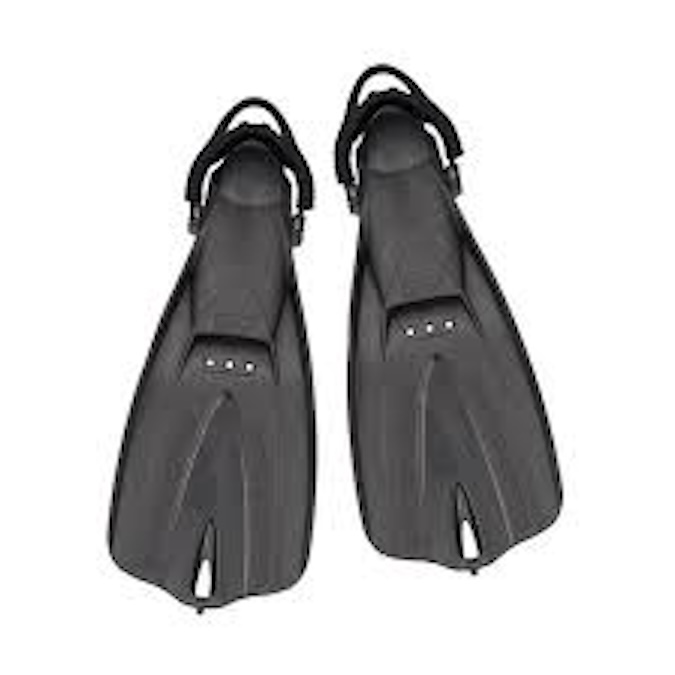
- Design: Shorter, lightweight blades for portability.
- Best for: Divers who frequently fly.
- Pros: Easy to pack, great for vacation divers.
- Cons: Limited thrust, not suited for strong currents.
Recommended Gear:
- Mares X-Stream Travel Fins – Compact yet effective for casual diving trips.
- Aqua Lung HotShot Fins – Lightweight design with excellent flexibility.
Freediving/Long-Blade Fins
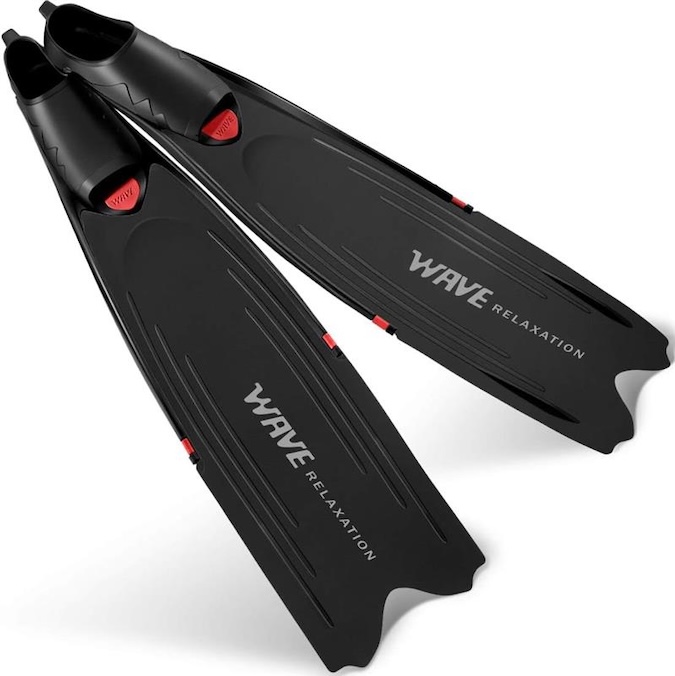
- Design: Extra-long blades for maximum efficiency.
- Best for: Freediving and spearfishing, not standard scuba.
- Pros: Excellent for surface swims and deep dives.
- Cons: Hard to maneuver in tight spaces; not practical for average scuba dives.
Recommended Gear:
- Cressi Gara Professional Fins – Designed for freedivers but adaptable for specific scuba uses.
Technical Diving Fins
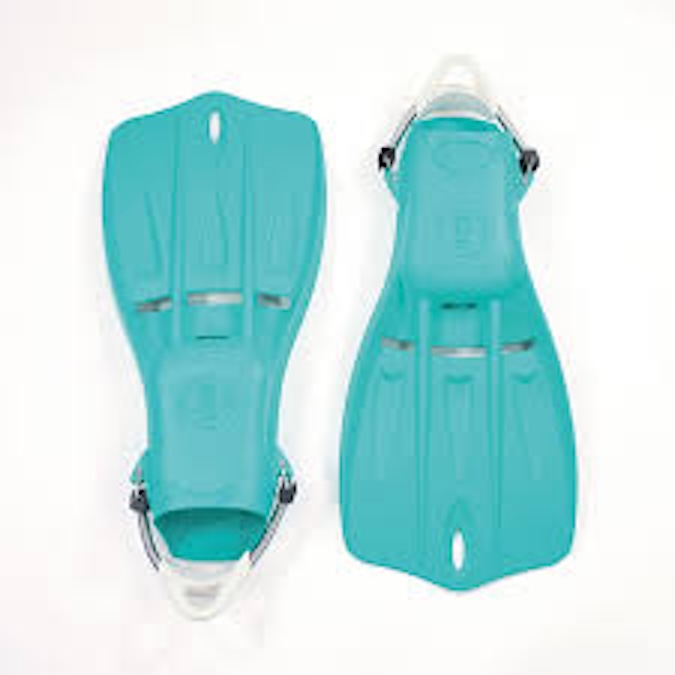
- Design: Short, stiff blades, usually made of heavy-duty rubber.
- Best for: Cave diving, wreck penetration, or diving with multiple tanks.
- Pros: Superb control for frog kicks and back kicks; durable.
- Cons: Heavy and less efficient for long swims.
Recommended Gear:
- OMS Slipstream Fins – Lightweight monoprene design with strong control.
- Scubapro Jet Fins – Classic heavy-duty choice for technical divers.
How to Choose the Right Fins
When selecting fins, ask yourself:
- Where do you dive most often?
- Warm tropical waters → Full-foot.
- Cold or rocky entries → Open-heel with boots.
- What’s your dive style?
- Relaxed reef dives → Paddle or split fins.
- Technical wreck or cave diving → Stiff rubber fins.
- Do you travel often?
- Yes → Travel fins.
- No → Standard open-heel or full-foot fins.
- How strong are your legs?
- Stronger divers → Paddle fins for raw thrust.
- Looking for efficiency → Split fins to conserve energy.
Care and Maintenance
- Rinse fins with fresh water after every dive.
- Dry in the shade to prevent UV damage.
- Store flat or hanging—not bent.
- Inspect straps and buckles regularly.
- Travel tip: Pack fins along the edges of your dive bag for protection.
Final Thoughts
Your fins are one of the most personal pieces of scuba gear you’ll own. The right pair makes diving smoother, more efficient, and more comfortable. From lightweight full-foot fins for tropical vacations to rugged open-heel fins for cold-water diving or technical fins for advanced dives, there’s a style for every diver.
Think about where you dive, how you dive, and what feels comfortable on your feet. Investing in fins that match your needs will not only make your dives safer—it’ll make every kick feel effortless.
FAQs: Scuba Fins
Scuba fins are generally longer, sturdier, and designed to handle the added drag of scuba gear. Snorkeling fins are shorter and lighter.
Not really—full-foot fins are designed for bare feet. If you want to wear booties, choose open-heel fins.
It depends. Split fins reduce effort and strain, making them great for long, easy dives. Paddle fins deliver more power, especially in currents.
Follow manufacturer sizing guides. Open-heel fins are adjustable, but full-foot fins must match your foot size closely.
You can, but they’re not ideal. Freediving fins are long and harder to control in tight spaces, so they’re better left to freedivers.