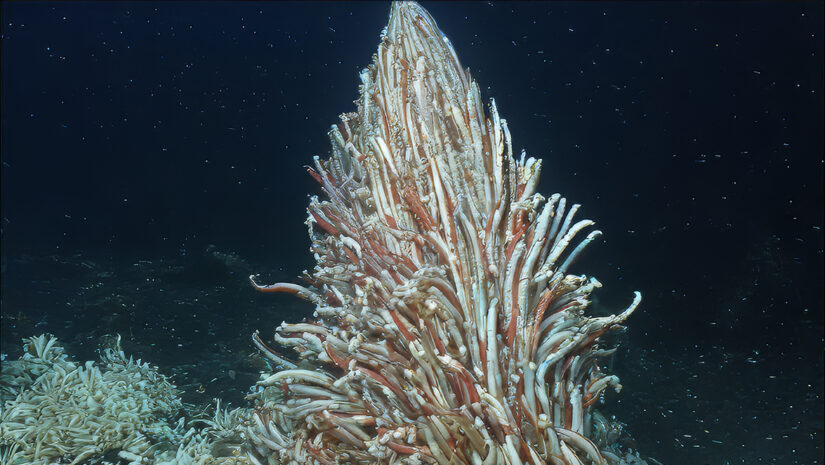
Tubeworms are among the ocean’s most prolific creatures. They are believed to have one of the most extended lifespans of any living organism on Earth. Some tubeworms are estimated to be over 250 years old! While there is a stunning variety of sizes and appearances in tubeworms, they all share several key characteristics.
The Harsh Life of Tubeworms
All tubeworms have a soft body encased in a more complex outer tube. This tube can be rigid like a shell or have a more leathery texture. The outer tube provides a safe retreat for the tubeworm when it feels threatened, allowing it to retract in just a fraction of a second. Tubeworms are sessile creatures, meaning they remain anchored in one spot, typically within the crevice of a rock or coral. At the opposite end of their anchoring point is the tubeworm’s plume, which sways in the water column to capture the chemicals it needs to survive.
The microbes that live inside the tubeworm are essential for survival as they metabolize the chemicals harvested from the water column. This process provides the tubeworm with the necessary nutrients, creating a perfect symbiotic relationship.
These unique creatures are mouthless, gutless, legless, yet remarkably resilient, surviving in various ocean depths and temperatures. The Tubeworm species can be found in diverse environments, from deep-sea vents and cold seeps to shallow coral reefs. Their delicate plumes retract suddenly when approached, making them unmistakable.