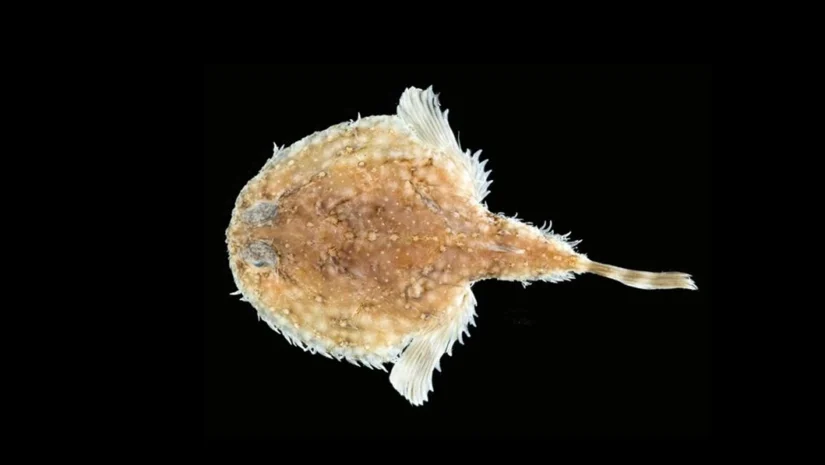
A new fish species has been put on the Top 10 New Species of 2011 list: the Louisiana pancake batfish. Originally thought to be part of a known species of batfish, it was recently concluded that this, indeed, was its own species.
The pancake batfish is a member of the anglerfish family. This diminutive fish only measures about 4 inches long, making it easily fit into the palm of your hand. It is flat, resembling a pancake in shape (hence the name), and its skin is mottled with bumps and color variations, providing excellent camouflage within the sandy, ocean debris-littered area it inhabits. It subsists on a diet of plankton, small crustaceans, and gastropods, many of which can be found in its habitat’s coral reef systems.
Characteristics of the Louisiana Pancake Batfish
The most remarkable feature of the pancake batfish is its fins, which are used more for “walking” than swimming. The “batfish” part of its name comes from its gait resembling a walking bat. Because this fish is a bottom dweller, its fins have adapted to become almost arm-like; it uses them to push and skip about the ocean floor. Due to the extraordinary camouflage of its body and its propensity to dig into the sea floor, the pancake batfish is rarely seen, and the collection of samples for study has been limited.
Where can you find them?
The pancake batfish is only known to reside within the Gulf areas, the tropical coasts of the lower eastern US states and territories, the Caribbean, Mexico, and Central and South America. The problem scientists face in trying to learn more about this species is that it is already endangered due to the massive oil spill in 2010. It is not only direct contact with the oil that can kill off the fish; the indirect effects, like their primary source of food dying or being poisoned, along with egg sacs being destroyed by the spill’s damage, pose a grave threat to the longevity of this newly discovered species.
Conclusion
As with all forms of life, the Louisiana pancake batfish does play a role in the balance of our planet’s ecosystems. Hopefully, this species will find a way to persevere so we may not lose a species so soon after its discovery.