Beneath the waves, safety and preparedness are paramount. One essential practice that seasoned divers swear by is something called an “S-Drill.” But what exactly is that and why is it so crucial in diving?
Understanding what an S-drill is
The S-Drill, short for “Safety Drill,” is a structured, deliberate practice where you and your buddy go through the motions of sharing air, ensuring that when (not if) something unexpected happens, you both react instinctively rather than panicking. Think of it as muscle memory training for your survival.
The purpose of it isn’t just about knowing where your alternate air source is — it’s about being so familiar with the process that, even in the murky chaos of a real emergency, your hands move before your brain has time to freak out.
The purpose of the S-drill in diving
Emergency preparedness
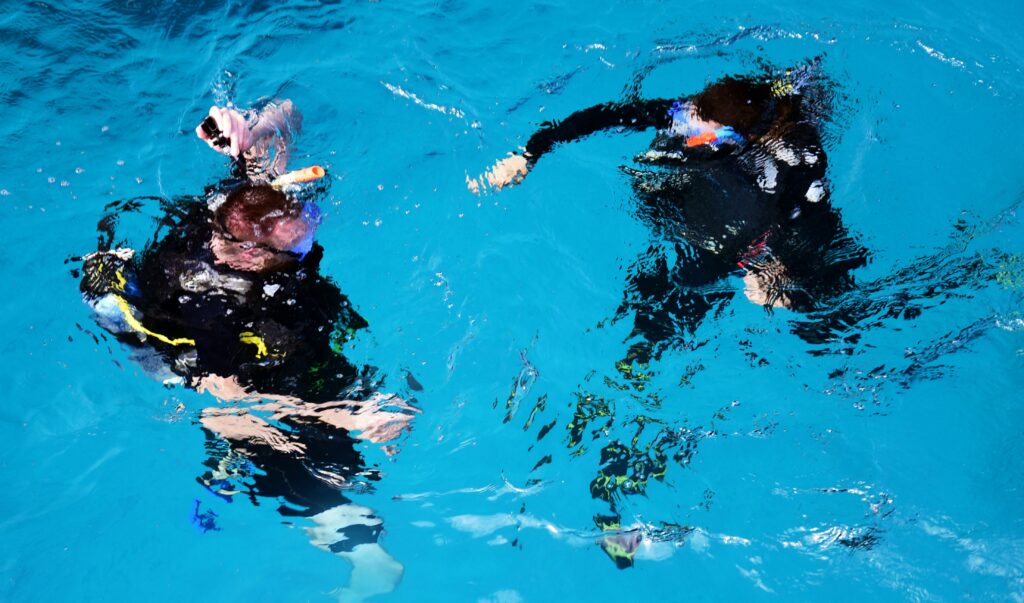
The whole point of the S-drill is to make sure that when an air emergency happens, you don’t freeze, fumble, or waste time figuring out what to do. Instead, your training kicks in like muscle memory. Then, you execute a smooth, controlled air-sharing process with your buddy. The safety drill conditions you to react swiftly and calmly, reducing the likelihood of panic. And that is the number one enemy in an underwater emergency.
Equipment familiarity
The drill is about understanding your dive buddy’s gear as well as your own. Not all setups are the same — alternate air sources may be clipped in different locations, hoses may be routed uniquely, and some divers might even use different types of regulators.
Great for building trust

When you do an S-drill together, you’re both practicing mechanics and building confidence in each other. You’re proving that if something goes wrong, you’ve got each other’s backs, which makes for a way more enjoyable (and safe) dive. Because at the end of the day, diving is about exploration, not anxiety. And a well-practiced S-Drill ensures that if trouble strikes, you’re ready for it.
Common mistakes divers make when practicing the S-drill (And how to fix them)
Practicing the safety drill is great… but only if you’re doing it right. But let’s be real! A poorly executed S-Drill doesn’t just waste your time, it births false confidence. And in a real emergency, false confidence turns into real panic, real confusion, and real danger.
Below, let’s talk about the biggest mistakes divers make during these drills.
Rushing through the drill

Many divers treat the S-Drill like a quick warm-up. However, that mindset misses the entire purpose of the drill. It’s supposed to be about mastering an emergency response. If you rush through it, you’re not ingraining the correct muscle memory, and you risk fumbling when it matters most. Yikesss!
Fix this by slowing down and focusing on deliberate movements. Practice the S-Drill as if it’s a real emergency, even when you know it’s just a drill. Make sure your hand movements are smooth, your gear checks are intentional, and your buddy has time to fully engage in the process.
Poor communication
OH NO! Your buddy signals that they’re out of air. You nod and begin the drill. But, like, are you actually seeing each other? Eye contact is often overlooked in the safety drill. However, in an emergency, it’s everything.
Fix this by making eye contact before you begin the drill. Use slow, exaggerated signals, and be 100% sure your buddy understands what’s happening before you reach for your alternate air source. When practicing, make a habit of confirming each step visually, not just assuming your buddy knows what’s next.
Fumbling with the alternate air source
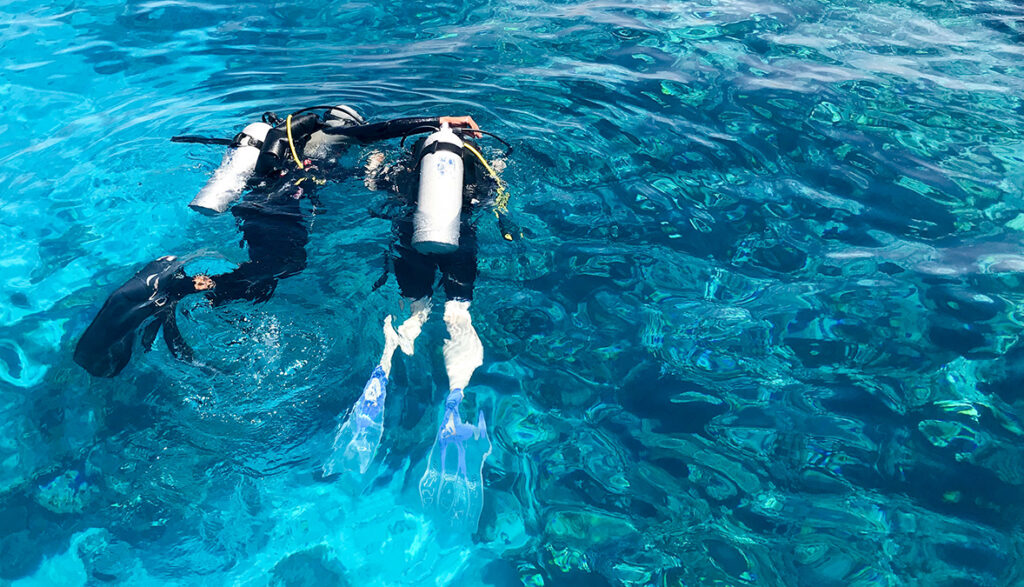
You reach for your alternate air source… only to realize… it’s clipped in too tight, tangled in a hose, or worse… not there. Yeah. It happens. And if it happens in a controlled practice, imagine how much worse it’ll be when adrenaline is pumping and your buddy really needs air. One of the biggest oversights in S-Drill practice is assuming your gear will always be exactly where you left it. Spoiler: It won’t.
Fix this by checking your setup before every dive. Is your alternate air source easily accessible? Can you deploy it with one hand? When you practice the S-Drill, focus on a smooth, controlled handoff. Your buddy should be able to locate and take your alternate air source without a wrestling match.
Ignoring real-world conditions
I think of practicing the S-Drill in warm, clear, calm water like learning to drive in an empty parking lot. I mean, it’s a good start, but it doesn’t prepare you for rush-hour traffic. This might alarm you, but the ocean isn’t a swimming pool. If you only practice in perfect conditions, you’re setting yourself up for failure when things get real.
Fix this by varying your practice environment. Try doing the S-Drill in murky water, in surge, or while wearing thick gloves. Practice at different depths, with different buddies, and in different gear configurations.
Commitment is the key to mastering the S-drill!
The S-Drill is about committing to safety, not just for yourself but for your dive buddy. When done right, it becomes second nature. Like something you don’t even have to think about when an emergency strikes.
So next time you gear up, don’t just do the S-Drill — do it right. Because underwater, preparation is what separates a minor inconvenience from a full-blown emergency.