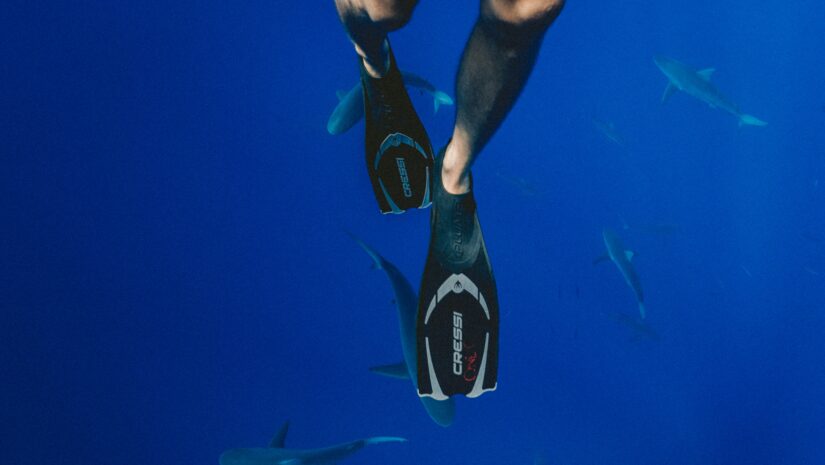
In our last gear-related post, we dived into the History of SCUBA Diving & saw the basic progression of SCUBA Gear as we know it today. Scuba technology has grown with the times, and scuba manufacturers today cater to much more than just basic functionality. Modern advancements in Scuba equipment show a progression in design, keeping a diver’s comfort and considering different situations a diver might find themselves in. Here’s a closer look at scuba fins, then and now.

Then
As you can imagine, the progression of scuba gear also evolved the concept of fins (also known as swimfins or flippers). All improvements were made after observing marine life and their ability to move through water efficiently. The design and idea of the invention of fins are credited to a few who thought of this in the same way to improve man’s mobility in water. They included Leonardo da Vinci, Giovanni Alfonso Borelli (son of a Spanish soldier and Italian mother from Naples in 1608), and Benjamin Franklin (who is said to have made a pair of early swimfins using two thin pieces of wood in the early 1700s).
Corlieu and Churchill
However, Louis de Corlieu in France and Owen Churchill in the United States, working independently of each other, were the first to make swimfins a practical reality. Louis de Corlieu was the first to patent swim fins in France in 1933. Churchill, too, patented his design, which was said to have been inspired by a group of natives in Tahiti, who he noticed on the beach weaving small mats from palm fronds and dipping them into a tub of hot tar.
When the tar had cooled and hardened, they would tie these mats to their feet and enter the ocean to swim or free dive. Fascinated by what he had seen, he returned to the States and began developing and patenting the first rubber swim fins in the US. The first essential fins looked like this…
1948
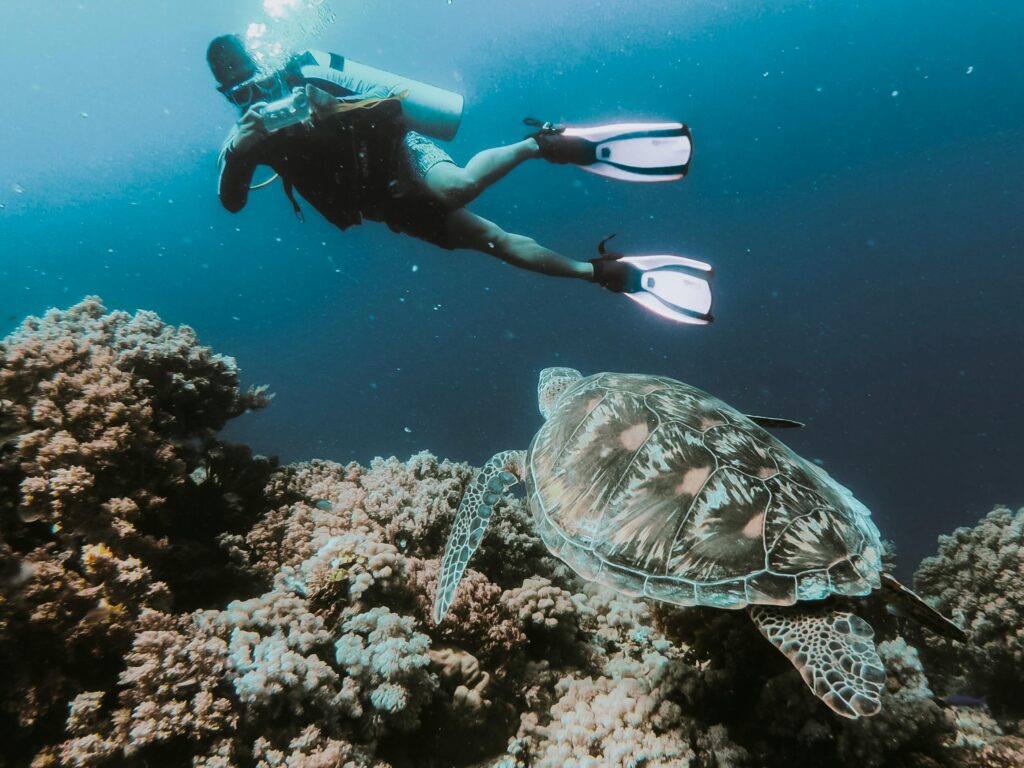
In 1948, Luigi Ferraro collaborated with the Italian diving equipment company Cressi-sub and designed the first full-foot fin, the Rondine, named after the Italian word for swallow. Till today, Cressi’s Rondine full-foot fin line features the embossed outline of the bird on the foot pockets and the blades.
Fins first started out as bare, simple, stiff plastic, composite, or rubber blades. This bare fin is known today as paddle fins. In 1964, Georges Beuchat commercialized Jetfins, which were vented fins. The vents at the base of the foot pocket were designed to allow for the passage of water to lessen effort during recovery and improve kick efficiency. The Jetfin tradename and design were sold to Scubapro in the 1970’s.
Now
Today, the progression of scuba gear has brought along several different designs, including the very popular split fins. These fins are said to work in a similar fashion to propellers, where they create lift forces to move the swimmer forward. (Read our Split Fins Vs Paddle Fins post for more). Pivoting blade systems designs and the use of multiple materials on the fin blade to make it more flexible and allow water to channel of it better, are newer designs used by equipment manufacturers nowadays (see: Mares Volo Fins with Optimized Pivoting Blades)
Of the more unique designs of fins, today comes Force Fins, featuring an open foot pocket that encloses only the instep, leaving the toes free so the foot can flex. Made exclusively by a California manufacturer, this range of fins is designed to minimize the water turbulence produced and reduce the diver’s kicking effort. Force Fins are closely modeled to fish tails with a v-cut at the blade end and are made from polyurethane.

FlipFins are another unusual fin design that is considered a diver mobility issue when they need to walk on land-wearing fins. The Amphibian FlipFins from Omega Aquatics are convertible fins designed to be half fins and half shoe. They fold up out of the way, allowing you to walk freely out of the water and click down with your first kick once you’re in the water, turning into fins. (Read: A Cool Twist to Fins- Amphibian FlipFins from Omega Aquatics for more).
Mares X-Stream fins
Lastly, the latest arrival of the fancy fins is the X-Stream fins from Mares. Looking nothing like the traditional scuba fins we’re used to seeing, the Mares X-Stream fins look more like they arrived from the future. This lightweight fin is rated the lightest in its group and is said to be one of the faster fins in speed. And its successful design shows that it generates a lot of power for not a lot of effort, resulting from some award-winning design and technology. (Read more here: Next-Gen Fins: Mares Introduces The X-Stream Fins).