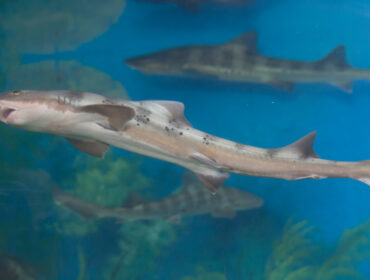
The Monterey Bay Aquarium, located in the city of Monterey on the northern California coastline, has long been renown for its outstanding exhibits showcasing the marine life of the region and beyond, as well as research programs that focus on the conservation of many oceanic species. Visitors to the aquarium can delve into the unique habitats of kelp forests, rocky shores, and open sea where jellyfish, enormous groupers, sharks, and a wealth of other marine life can be viewed within arm’s reach.
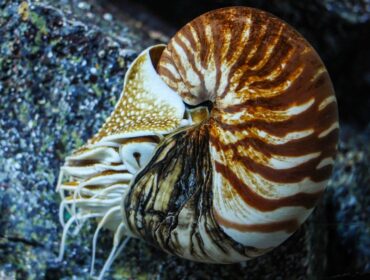
Their Tentacles exhibit is one of the most popular, housing up to 12 species of cephalopods from all depths of the sea, including octopus, squid, and nautilus. But the latest addition to this already fascinating exhibit is one that doesn’t usually enjoy the spotlight, and for good reason: lingering in it too long is bound to get it killed. So reluctant is this creature to join the rest of the world that the Monterey Bay Aquarium is the world’s first facility to display it for the public.
So what is this shy violet of the deep that they are so very proud to unveil? None other than the Japetella octopus.
Hailing from the very small Bolitaenidae family that consists of only two genera, the Japetella octopus is a pelagic species, found in tropical, temperate, and subtropical waters ranging from 25 to 2,500 meters beneath the surface. This diminutive species grows to just under 5 inches in total length, and is characterized by a translucent, lightly spotted gelatinous body that is extremely delicate, making it a very difficult creature for marine scientists to collect and study.
But a few specimens were unable to evade the clutches of science, enabling researchers to make an amazing discovery about the life of this tiny creature and how it survives in a world where sunlight simply doesn’t exist.
The deep sea is actually quite full of marine creatures that have adapted to an inky black existence, many of which have specialized organs that emit light for a variety of purposes, from attracting a mate to attracting a meal. These lights can be a very effective means of confusing or deceiving prey, but sometimes they act as simple searchlights, scanning the infinite dark for silhouettes indicating the presence of other life. But the Japetella octopus has an adaptation of its own that can effectively thwart this mission every time: color-changing chromatophores.
Chromatophores are light-reflecting, pigment-containing organelles inside cells that the animals who possess them use much in the same way that those with light-emitting organs use theirs. In the case of the Japetella octopus, its chromatophores are used to camouflage it from the prying lights of would-be predators by activating muscles attached to the organelles, causing them to spread out and change its appearance from translucent to opaque. This essentially acts as a cloaking device for the tiny cephalopod, as light is no longer able to pass through the body to illuminate organs and eyes its enemies need to locate it in the water column. Once the danger has passed, the octopus relaxes the chromatophore muscles and lives to see another day.
Take a look at this video of Duke University researcher Sarah Zylinski demonstrating the mechanism behind the magnificent disappearing act of the Japetella octopus.