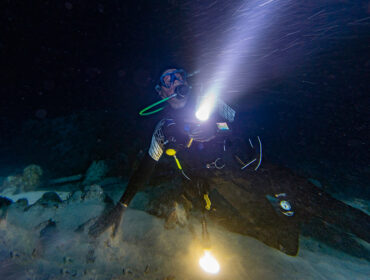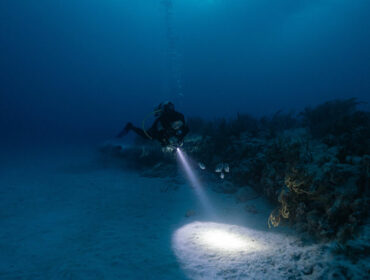
Scuba diving at night isn’t inherently dangerous, but it does require extra preparation, training, and the right equipment to stay safe. Reduced visibility, disorientation, and equipment failure are the main risks. With good planning and the right mindset, night diving can be just as safe as a day dive — and often more rewarding.
A night dive is any scuba dive that takes place after sunset. Divers usually descend in low light or full darkness, using underwater torches to navigate. The lack of natural light makes even familiar dive sites feel new, mysterious, and transformed.
For many divers, one big question still remains: Is night diving more dangerous than diving during the day?
This article breaks down the real risks, the common misconceptions, and how training and equipment make night diving a safe and unforgettable experience.
What are the Dangers of Night Diving?
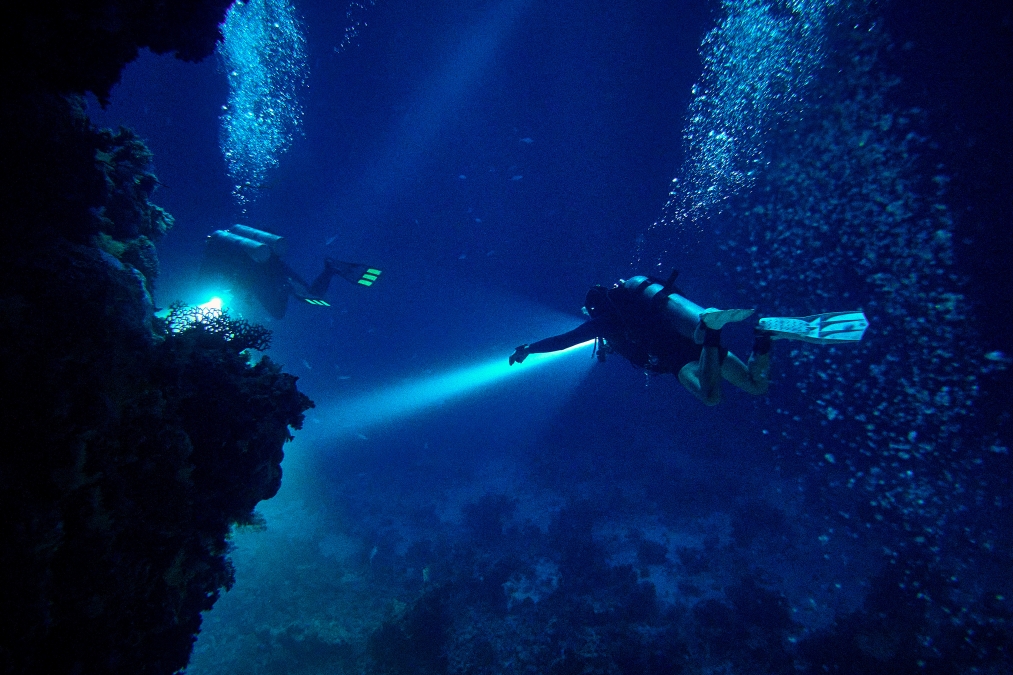
Night diving can seem intimidating at first, and many divers assume it’s more dangerous than diving during the day. While there are additional considerations, most risks are manageable with the right preparation. The key is understanding what changes when the sun goes down – and how to adapt your approach accordingly.
Reduced visibility and orientation
One of the main concerns is reduced visibility. Darkness limits your ability to see your surroundings, making it easier to lose your sense of direction or become separated from your buddy. Even familiar dive sites can feel unfamiliar at night because underwater landmarks look completely different in the beam of a torch. Without a compass or clear navigation plan, a diver can quickly become disoriented.
Marine life misconceptions
There’s also a common belief that marine life is more dangerous at night, but this is often a misconception. In reality, many nocturnal creatures are simply more active after dark, and their behavior is usually more curious than aggressive. In fact, seeing species like octopuses, lobsters, and hunting predators is one of the most rewarding aspects of a night dive and not a reason to avoid it.
Equipment failure in the dark
Equipment failure can pose a more serious problem at night than during the day. If your primary dive light fails and you don’t have a backup, you could be left with no visibility at all. This creates a serious safety risk. That’s why carrying at least two reliable torches, a primary and a backup, is considered essential for any night dive.
Psychological factors and nerves
Finally, psychological factors can affect a diver’s perception of risk. Darkness can heighten anxiety, especially for those who are new to night diving or already prone to nerves. This can lead to poor decision-making or panic if not properly managed. However, with experience, familiarity, and good communication, most divers find that the fear fades and is replaced by a sense of calm and focus that’s unique to diving at night.
In short, night diving comes with its own set of challenges, but none that can’t be overcome. When divers are well-trained, properly equipped, and mentally prepared, night diving can be just as safe – and often more magical – than any dive during daylight hours.
How to Prepare for a Night Dive

Proper preparation is what turns night diving from something that feels risky into something that feels thrilling and safe.
A successful night dive starts before you ever get in the water. It starts when you begin writing your dive plan, discussing it with your buddies and preparing your equipment. To get started, follow these three main steps to prepare effectively.
Step 1: Choose a familiar dive site
According to the National Library of Medicine (NCBI), environmental issues have been identified as contributing factors in diving incidents.These are changes in weather, currents, tides, water temperatures and visibility. Therefore, one of the most important steps is choosing a familiar dive site. Diving a location you’ve already explored during daylight helps reduce the chances of getting lost or overwhelmed at night. You already know the layout, the entry and exit points, and the likely current or terrain conditions. This familiarity gives you confidence and lets you focus more on the experience than the logistics.
Step 2: Create a clear dive plan
A thorough dive plan becomes even more critical after sunset. Divers should agree on maximum depth, bottom time, turn-around points, and emergency procedures before entering the water. Communication methods should also be discussed. Light signals replace hand signals in the dark, so it’s important to be clear and consistent. A pre-dive torch check ensures everyone’s gear is functioning properly, and buddies should confirm backup lights are within reach.
Step 3: Manage your mindset
Your mental state plays a big role in how your night dive goes. Divers who stay calm and alert are more likely to make safe, rational decisions underwater. It helps to take a few deep breaths before descending and to remind yourself that the dive is no different from a day dive. On a night dive, you’re just relying on your torch instead of sunlight. Staying close to your buddy and maintaining a slow, steady pace also helps keep the dive controlled and enjoyable.
Ultimately, preparation builds confidence. When you know your site, trust your equipment, and communicate effectively, night diving becomes a smooth and rewarding extension of your regular dive practice — not something to fear, but something to look forward to.
Essential Night Diving Equipment Checklist

Having the right gear is one of the most important factors in night diving safety. Because visibility is limited, your equipment becomes your lifeline helping you see, be seen, navigate, and communicate. Every piece of kit plays a more noticeable role at night, and small details matter more in the dark.
Light sources and visibility tools
At minimum, every night diver should carry at least two reliable light sources. Your primary torch should be bright enough to illuminate the path ahead without creating too much glare. A backup torch is equally important. If your main light fails, a secondary light ensures you’re not left in total darkness. Tank marker lights or glow sticks can also help your buddy keep track of you during the dive.
Recommended equipment list
Here’s a breakdown of essential equipment for night diving:
- Primary dive torch: A bright, focused beam with good battery life.
- Backup torch: Smaller and easy to stow, in case the main light fails.
- Tank marker light or glow stick: Attached to your tank valve for visibility.
- Compass: Vital for navigation when visual references disappear.
- Surface marker buoy (SMB): Helpful for surfacing safely and being seen.
- Dive computer with backlight: Ensures you can track depth and time in the dark.
- Whistle or sound signaling device: Useful for surface communication.
- Appropriate thermal protection: Nights are cooler, so you may need a thicker wetsuit, hood, or gloves.
Why gear matters more at night
Each item has a specific function that enhances your awareness and safety. Dive lights help you see marine life and potential hazards. Compasses keep you oriented when the surroundings become unrecognizable. Thermal gear keeps you warm, because water temperatures can feel significantly colder at night.
Taking the time to double-check your gear before the dive and running through a light test with your buddy helps prevent surprises underwater. When your equipment is chosen carefully and maintained well, it gives you the confidence to focus on the dive itself, not the what-ifs.
Do You Need a Special Certification for Night Diving?

While night diving isn’t legally restricted to certified night divers, most training agencies strongly recommend, and often require, taking a night diving specialty course before your first after-dark descent. These courses are designed to build your confidence and expand your skills. They help you respond calmly to unfamiliar scenarios in low-light environments.
What night diving courses cover
Agencies like PADI, SSI, and NAUI offer night diving specialties that introduce the tools and techniques needed to dive safely after dark. These courses typically include both classroom and open water components. Divers cover topics like underwater communication with light signals, compass navigation in darkness, and proper use of dive lights and markers. Some also incorporate entries and exits in limited visibility, as well as how to manage anxiety or disorientation.
The value of practical training
Taking a night diving course gives you practical experience in a controlled setting, under the supervision of an instructor. This reduces the learning curve and helps you develop muscle memory for using lights, checking gear, and staying oriented. You’ll also learn how to identify nocturnal marine life, signal your buddy with a torch, and handle emergencies like equipment failure in the dark.
Confidence through certification
More importantly, earning a night diving certification shows that you take your training seriously, and that mindset goes a long way toward improving dive safety. The ocean doesn’t change at night, but your relationship with it does. By building your skills through proper instruction, you turn night diving from something that feels risky into something that feels second nature.
Conclusion: Is Night Diving Dangerous?
Night diving isn’t about adding danger — it’s about adding depth to your diving experience. While it introduces new challenges, those challenges are manageable with proper preparation, the right equipment, and a steady mindset. Darkness changes how we see the underwater world, but it doesn’t change the fundamentals of safe diving.
One of the most magical aspects of night diving is the chance to witness bioluminescence — a natural phenomenon we explored in this article.
By choosing familiar dive sites, practicing solid dive planning, carrying essential gear, and pursuing proper training, divers can confidently explore the ocean after sunset. The reward? Encounters with marine life you’ll never see during the day, peaceful underwater moments, and a deeper connection with your surroundings.
So, is scuba diving at night dangerous? It can be — but only if you go in unprepared. With the right knowledge and mindset, night diving becomes not just safe, but unforgettable.