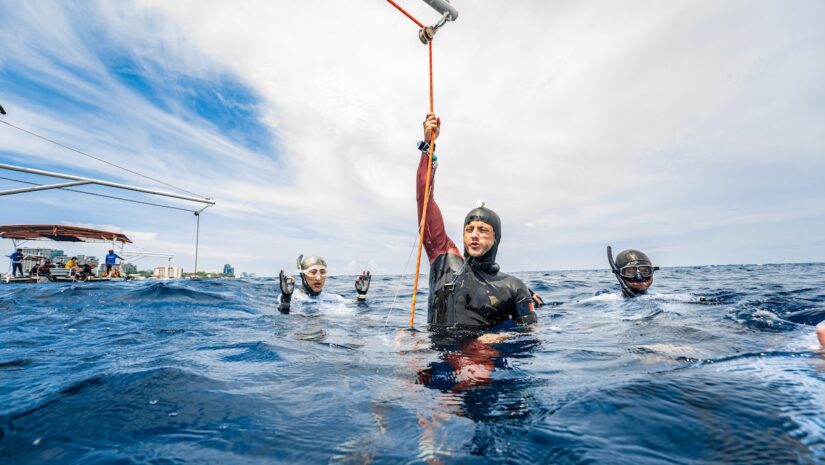
From leaving the corporate world to diving amongst the best in world championship competitions, and starting his own business along the way, 90m+ Peruvian freediver Gonzalo Cortez’s journey has been anything but ordinary.
We reached out to Gonzalo and asked him all about his achievements and future plans, and invited him to share his story with us of how a lifelong love for the ocean evolved into a full-time freediving career.
“Gonzalo! Please tell us about how you got into freediving and how it led to a full-time career…”
I’ve always been drawn to the ocean since I was a kid. After I left my corporate job in sports retail, I started traveling the world and eventually ended up in Thailand (in around 2016), where I got into scuba diving. A few years later, in 2019, I did my first freediving course.
Then in Australia, I completed my instructor course during COVID. Since there weren’t many job opportunities for foreigners, my friend (and now business partner) Matt and I started OceanSense Freediving.
We heard about a pool competition in a city two hours from where we lived, so we went just to check it out, and it was great. Later, when the borders reopened, I did my first depth competition in Panglao …and since then it has become a full addiction!
“Tell us more about OceanSense Freediving.”
We run courses, workshops, and training sessions in Brisbane, the Gold Coast, the Sunshine Coast, Airlie Beach, and now we just had our first course in Sydney before the end of the year, too.
I still run most of the courses, but I’m trying to step back from Level 1 courses so I can give opportunities to the freedivers I’m training. I think it’s the right thing to do as an Instructor Trainer as well.
We organise freediving trips and retreats to different parts of the world, aiming to expand freediving culture and knowledge.
“You had a big year in 2025! Can you tell us the national records and/or PBs you achieved?”
It has been a big year, yes. I was lucky to receive support from Peru’s underwater federation (FEDEPASA) to take part in the CMAS World Championship, and a grant from AIDA to participate in the AIDA World Championship. Unlike last year (when I did six competitions with a mix of pool and depth), this time I only had the two depth world championships, so I needed all white cards. I’m still surprised I managed it, especially with very limited time for depth adaptation. I only had 15 days in the ocean to train in depth, so I had to plan carefully and have alternative strategies for whenever a dive didn’t go as expected.
After those two weeks of adaptation to depth, the CMAS Depth World Championship in Greece began. I earned four white cards and four national records throughout the comp, these were:
- 90m in CWTB (bi-fins discipline)
- 86m in FIM (free immersion discipline)
- 56m in CNF (no-fins discipline)
- 90m in CWT (constant weight discipline: bi-fins or monofin)
These achievements meant adding about 10 meters (33 feet) to my official CWT (constant weight discipline) PB (personal best) depth. I finished in the top 10 in two disciplines and ranked sixth overall, even though they don’t officially consider overalls in that competition, I’m still very happy!
A similar situation happened at the AIDA World Championship, where I improved on all of my depths from the CMAS competition by at least a meter:
- 91m in CWTB
- 90m in FIM
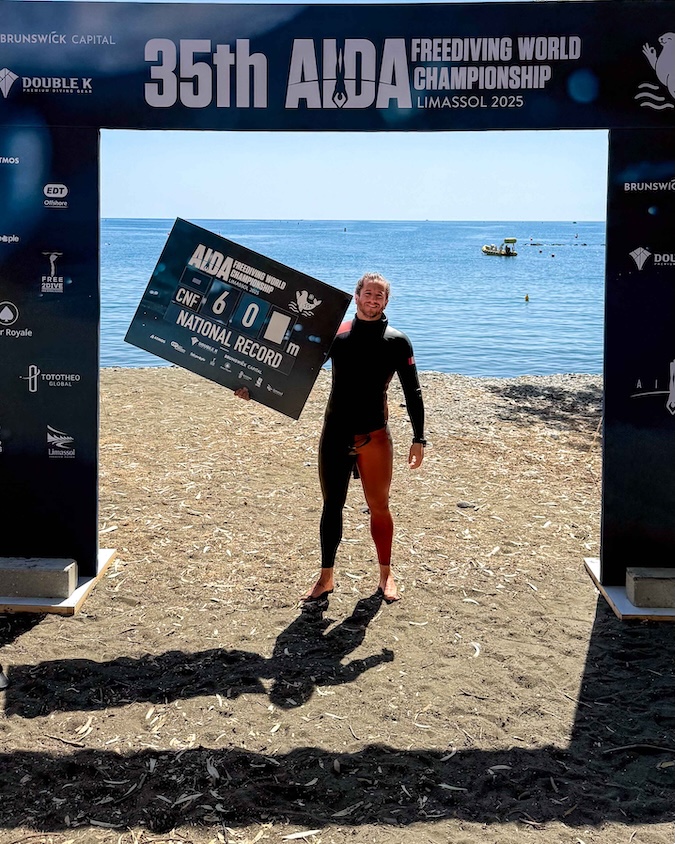
- 60m in CNF
- 93m in CWT
In CWTB I had a small LMC (loss of motor control, due to lack of oxygen), but I managed to control it and was OK. I ranked fifth overall in this comp, and also placed in the top ten in two disciplines. Each of these dives was also an absolute National Record for Peru.
“How do you juggle teaching and your freediving training?”
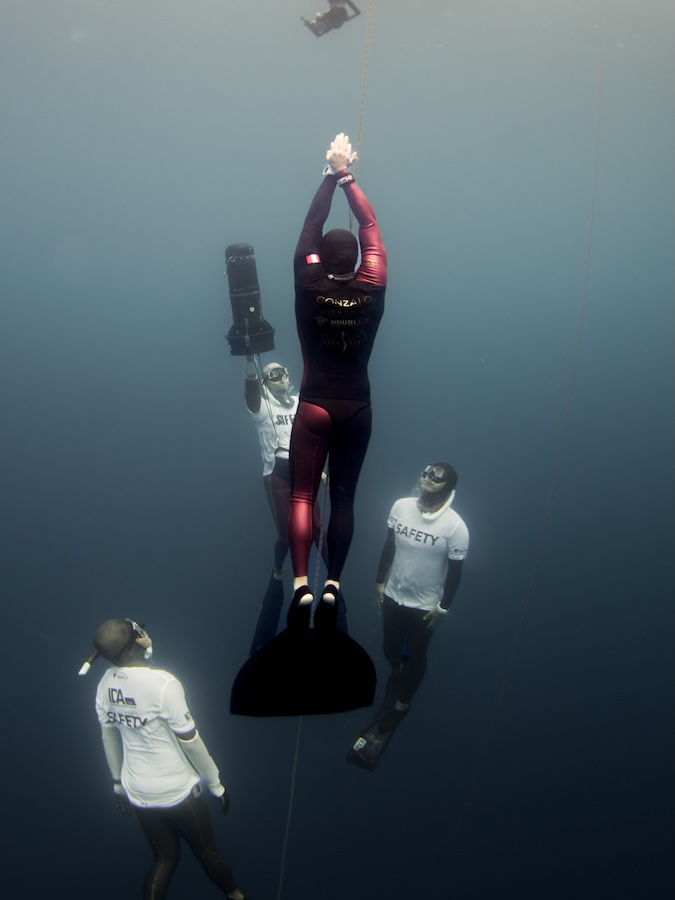
It’s literally a juggle …I tend to set my training based on my goals and divide my year into “seasons.” During summer in Australia, I teach more regularly, so I can mainly focus on pool and gym training, hoping that regular teaching dives help me maintain some adaptation to depth.
Usually, I take a week of depth training around June to assess where I am; see what my “easy dive” is, and which depth I can do without turning early. Based on that, I decide what to focus on next. From then until competition season, I increase the intensity of pool and gym training and add more dry equalization work, mobility, and dry adaptation. That way, when depth adaptation starts, both mind and body are already sharp (and hopefully the wallet too!).
“Do you get coached in preparation for competitions?”
For pool and gym training, I prefer to have someone guiding and pushing me. I tend to go too hard at the beginning (or sometimes not enough) and that affects my overall development.
My mouthfill training, stretching, mobility, visualization, and depth adaptation I manage myself.
“Do you also coach other athletes?”
A few, yes. I also coach non-competitive freedivers preparing for trips or with specific goals. I think I find just as much joy helping others reach their goals as achieving mine.
“What’s your advice for someone who wants to one day compete in freediving?”
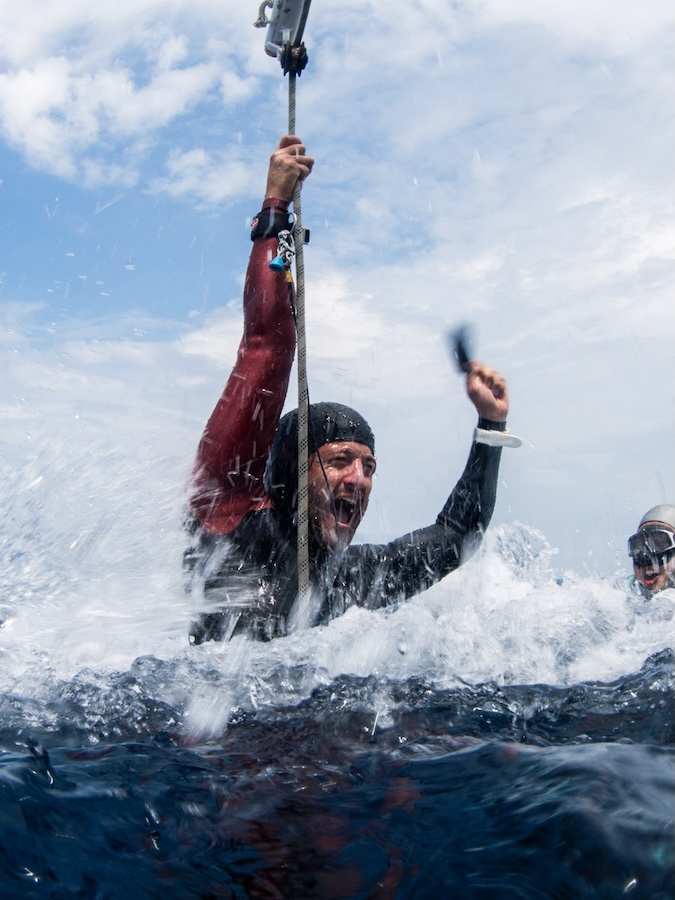
Just go for it. Go for the experience; to see what it’s like from the inside. I’ve heard so many people say, “Why would I compete? I’m nowhere near a national record”, but not all competitors go for records. First, you go to see how you feel in that environment; how it is to perform with nerves and pressure. You get to sit down with people who have been doing this for years and listen to their advice. I’ve learned more about equalization from sitting with deep athletes, eating ice cream and drinking coffee, than from any coach.
It’s a completely different perspective from recreational freediving. And the sport is so small that you really do end up sharing time with top athletes.
“What is the hardest part about training and competing?”
Being able to train and still find time to work. Sadly, competing is expensive and freediving is still a small sport, so fitting work into the training schedule is probably the hardest part!
“What are your plans for 2026? Any goals?”
My baseline goal is always to match my previous year, and any extra meters are always welcome. I know what I need to work on to increase my numbers safely, but nothing is guaranteed; the body and mind behave strangely and can change a lot from one year to the next.
I’ll try to attend at least one competition mid-year, and hopefully my adaptation for the next world championship won’t be too difficult.
Well, we can’t wait to see what 2026 holds for this inspiring athlete! Be sure to follow his journey here!