
Drysuit diving introduces a new dimension of buoyancy control. Unlike wetsuits, which compress and expand with depth, drysuits trap a layer of insulating air between the diver and the water. This airspace offers excellent thermal protection in cold water diving but also demands the right way of managing buoyancy.
This article explores the mechanics of buoyancy in a dry suit, outlines techniques for effective control, and provides strategies to address common challenges. Whether you’re transitioning from wetsuit to drysuit diving or refining your skills for technical environments, understanding these principles will enhance both your control and your confidence underwater.
Understanding the Differences Between Wet and Drysuits
A wetsuit provides insulation through a layer of neoprene, which contains tiny gas bubbles. As depth increases, ambient pressure compresses the neoprene, reducing both its thickness and buoyancy. This compression leads to a predictable loss of lift, which divers compensate for using their BCD.
This passive system requires minimal direct management. However, it comes with limitations in cold environments where heat loss becomes a serious concern.
A drysuit seals the diver off from water and insulates using air trapped between the suit and the undergarments. As the diver descends, this air compresses just like in a BCD. Air must be actively added via the drysuit inflator valve to prevent suit squeeze and maintain neutral buoyancy.
Unlike a wetsuit, the drysuit itself becomes part of the buoyancy control system, working in tandem with the BCD. Mastering buoyancy in a drysuit is critical for diver safety, trim, and comfort.
Why Buoyancy Management is More Complex in a Drysuit
In a drysuit, the diver must manage two independent buoyancy systems, an internal (the suit) and an external (the BCD). This dual system introduces complexity. Mismanagement can result in air pooling in the legs, excessive positive buoyancy, or unstable trim – all of which you should avoid.
This complexity demands focused training, consistent practice. It also requires a nuanced understanding of how air behaves inside the suit during ascents, descents, and changes in body position. For new drysuit divers, this can feel awkward and unintuitive at first—but with repetition, muscle memory builds. Over time, buoyancy control becomes second nature, allowing for confident, precise movement even in demanding cold water environments.
Mastering Buoyancy Control in a Drysuit
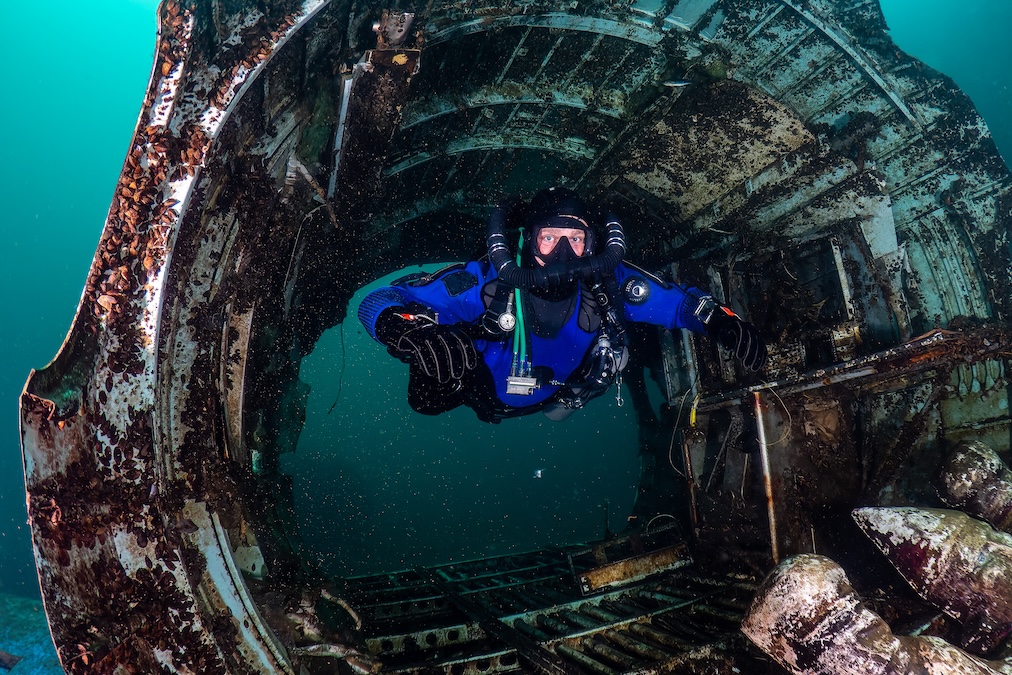
Effective buoyancy control in a drysuit involves managing two buoyancy systems: the drysuit itself and the BCD. Understanding how to use these systems together is crucial for maintaining stability and safety underwater. A drysuit specialty course provides essential knowledge and foundational skills, but nothing replaces consistent, real-world practice to build true proficiency.
Using your BCD in Tandem – or Not?
There is no single universal method for managing buoyancy in a drysuit. Different training agencies teach different techniques, and each has its reasoning.
Some agencies, such as PADI, have taught that divers should use the drysuit as the primary buoyancy control device underwater, reserving the BCD solely for surface use. The rationale is to minimize task loading by managing only one buoyancy system at depth. This method simplifies the process for newer divers. However, it can introduce challenges during ascents, particularly when venting air quickly becomes critical.
Others, including BSAC and many technical training agencies, recommend that divers use the BCD as the primary means of managing buoyancy control throughout the dive. They teach to only add enough air to the drysuit to eliminate suit squeeze. This approach offers finer control, reduces the risk of feet-first ascents, and allows divers to manage gas expansion during ascent more predictably.
The choice often comes down to personal preference, training background, and the diving environment. However, what’s most important is that divers understand how each system behaves under pressure and practice managing them safely. Task loading – particularly when ascending and needing to vent two air spaces – can be a real challenge if skills are not well-honed.
No matter which method is taught, all divers should be trained to recognize the risks of over-inflation, understand the principles of gas expansion at depth, and practice coordinated buoyancy control in a controlled environment.
Practice Techniques for Drysuit Buoyancy
Developing proficiency in drysuit buoyancy control requires consistent practice. Divers should focus on:
- Controlled Descents: Practice adding air to the drysuit gradually to prevent squeeze without overinflating.
- Trim and Stability: Work on maintaining a horizontal position in the water, using the BCD or drysuit inflator to fine-tune buoyancy.
- Ascent Control: Learn to vent air from both the BCD and drysuit during ascents to prevent uncontrolled rises.
Emergency Procedures: Familiarize yourself with handling situations like stuck inflator valves or rapid ascents.
Avoiding the Feet-First Issue
One of the biggest worries for new drysuit divers is the dreaded feet-first ascent. This situation occurs when excess air migrates into the legs of the suit, causing the diver to invert and ascend uncontrollably. It’s an unsettling experience, especially when it catches a diver off guard during early training dives.
Air naturally rises to the highest point in the suit, so maintaining good trim and managing air volume throughout the dive are essential. Keeping a slight head-up orientation, avoiding over-inflation, and venting regularly during ascents all help reduce the risk. Instructors may recommend gaiters or ankle weights, but in most cases, proper technique is enough to prevent the issue.
If a feet-first ascent does begin to happen, the recommended corrective action is to perform a forward roll. Tucking the chin to the chest, bending the knees, and rolling forward can shift the air toward the exhaust valve, allowing it to be dumped and restoring control. Like any emergency skill, this maneuver should be practiced in a controlled environment until it becomes instinctive. With time and experience, managing air in the legs becomes second nature, and the fear of an uncontrolled ascent fades and confidence increases.
Common Buoyancy Management Challenges in Drysuit Diving
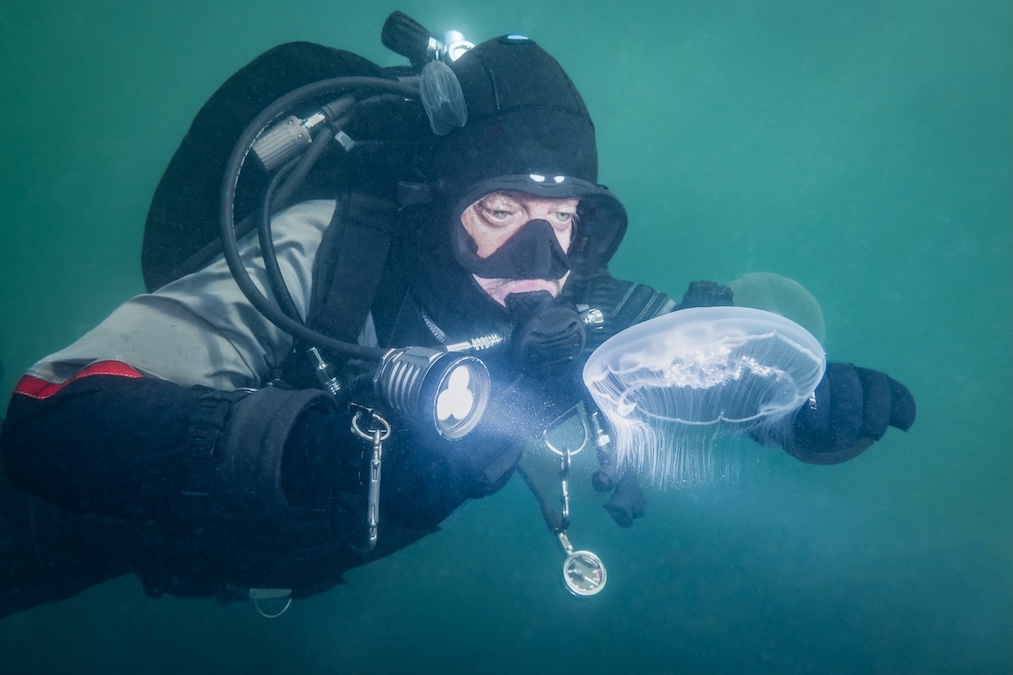
Even with solid training, drysuit buoyancy comes with a unique learning curve. Understanding the most frequent problems divers face and how to handle them can significantly improve safety, control, and confidence underwater.
Managing Air Migration Within the Suit
Air in a drysuit isn’t fixed – it moves. As you change body position, the air inside the suit naturally shifts to the highest point. If this isn’t anticipated and controlled, it can result in sudden changes in trim or buoyancy. For example, shifting from a horizontal position to vertical can cause air to move into the legs or feet, destabilizing the diver – just as we were discussing above.
Awareness of body position and continuous micro-adjustments using the exhaust valve are key to preventing these shifts from becoming problematic. Mastering this skill helps maintain horizontal trim and reduces task loading during the dive.
Dealing with Over-Inflation or Suit Squeeze
Over-inflation usually occurs when divers overcompensate with the drysuit inflator or forget to vent during ascent. This can lead to a ballooning suit, poor trim, or uncontrolled buoyant ascents. On the other end of the spectrum, failing to add enough air results in suit squeeze. This is a constrictive and uncomfortable experience that can impact circulation and movement.
The solution lies in precise, anticipatory buoyancy control: small, controlled bursts of air to prevent squeeze on descent, and regular venting during ascent. Using the exhaust valve efficiently and staying ahead of depth changes will minimize both extremes.
Emergency Ascent Scenarios and Prevention
An uncontrolled ascent due to runaway buoyancy is one of the most serious risks in drysuit diving. It often results from trapped air in the legs, a stuck inflator valve, or improper venting technique. Prevention starts with proper weighting, ensuring you are neutrally buoyant without relying on excessive air in the suit or BCD.
Familiarity with emergency procedures such as disconnecting a malfunctioning inflator or initiating a forward roll to dump air is essential. Training these scenarios in a controlled environment builds the muscle memory needed to respond calmly and effectively if something goes wrong in open water.
Equipment Tips for Better Drysuit Buoyancy

Buoyancy control isn’t just about technique, it’s also about setup. The right equipment choices, combined with regular maintenance, can make a significant difference in how easily you manage your drysuit underwater.
Undergarments
Undergarments affect more than just warmth, they also influence buoyancy. Thicker insulation traps more air, increasing positive buoyancy and requiring more lead. The key is finding the right balance between thermal protection and streamlined performance. Avoid bulky layers that trap excessive air or restrict movement. Remember that different undergarments may require adjusting your weighting and trim.
Dialing in Weighting and Trim
Accurate weighting is foundational to drysuit control. Overweighting forces you to add more air to the suit, which increases the likelihood of air migration and instability. Underweighting, on the other hand, can make it difficult to stay down at the start of a dive or control buoyancy during ascents.
Trim also plays a crucial role. Distribute your weights to maintain a horizontal position in the water. This often means placing some lead on a backplate, trim pockets, or tank bands rather than relying solely on a weightbelt. Gaiters or ankle weights can help reduce air movement into the feet but should be used to complement, not compensate for, good technique.
Experiment with weight positioning in a swimming pool or sheltered open water site where environmental variables like current, waves, or surge are minimal. This controlled setting allows you to fine-tune your trim and clearly feel how small adjustments in lead placement affect your balance in the water.
Drysuit Maintenance and Leak Prevention
A well-maintained drysuit behaves predictably. Sticky inflator valves, a sluggish exhaust valve, or unnoticed leaks can all undermine buoyancy control and safety. Before every dive, conduct a thorough pre-dive check: test valves, inspect seals, and confirm zipper integrity.
Between dives, store the suit properly, rinse salt and grit from valves, and follow the manufacturer’s care instructions. Regular professional servicing keeps components functioning smoothly and extends the life of the suit.