As the annual Fire Department Instructors Conference, FDIC International, fast approaches (April 20-25 in Indianapolis), I’ve found myself reflecting on recurring conversations with Todd Rishling, Safety and Operational Training Executive at Interspiro. Interspiro specializes in respiratory protection equipment for firefighting, diving, emergency escape, and other search-and-rescue operations, all environments where failure is not an option.
The question that repeatedly comes up is: How do we reduce risk while increasing operational efficiency in high-consequence environments like public safety diving?
Todd and I come at this from slightly different vantage points, his from the manufacturing and system-engineering side, mine from procurement and departmental support. But we’re in agreement on the following fundamental point: The future of fire and public safety equipment is no longer about individual components and incremental upgrades. It’s about fully integrated systems designed to protect first responders reliably under extreme and unpredictable conditions. As we get ready for the upcoming FDIC, these concerns and solutions are top of mind.
Industry Evolution: From Equipment to Engineered Systems
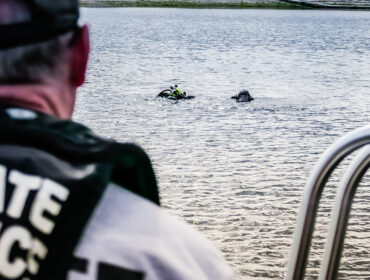
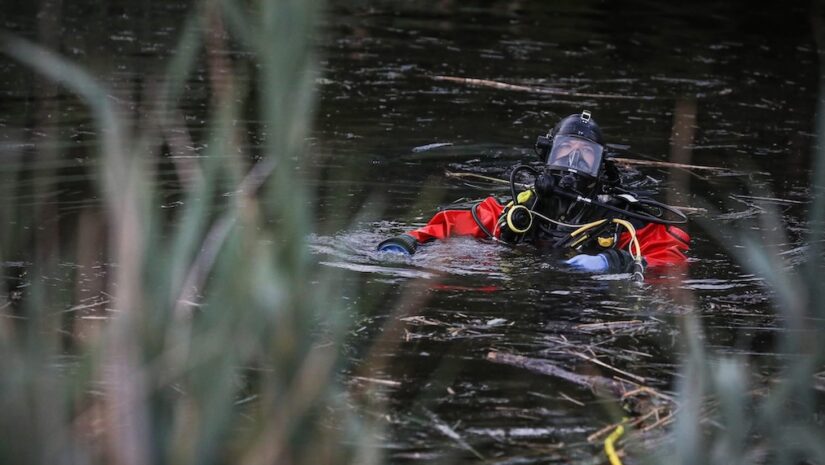
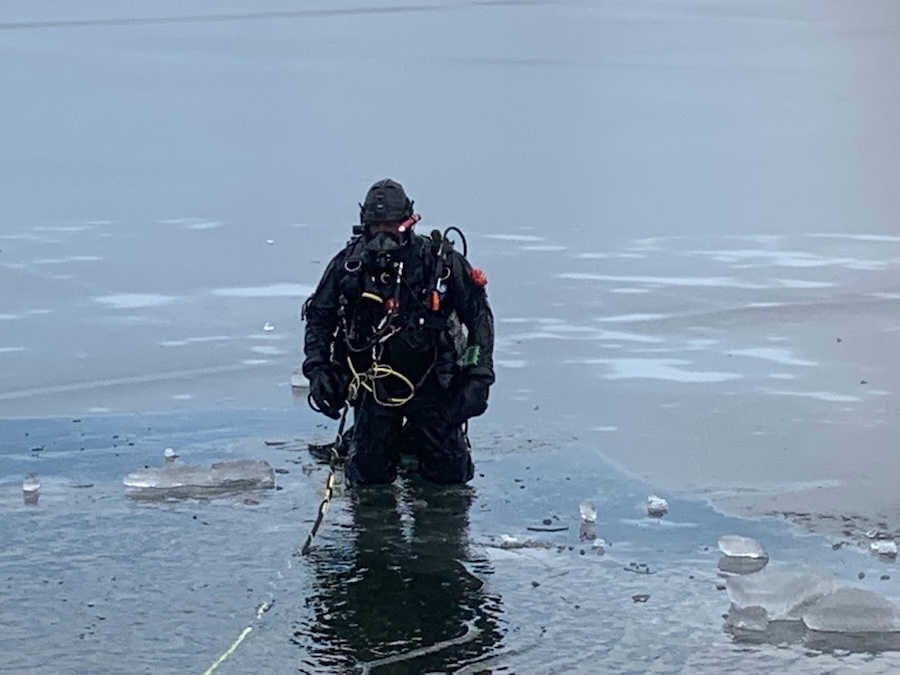
Respiratory protection has always been central to the fire service. But today, its role reaches well beyond traditional SCBA operations. Departments are responding to vehicle submersions, contaminated floodwaters, ice incidents, and recovery operations in zero visibility. These are not recreational conditions; they are hazardous, liability-heavy, and unforgiving.
One of the key themes Todd highlights is the difference between assembled gear and certified systems. “In the U.S., public safety dive teams have historically mixed and matched components from various manufacturers,” he explains. “That flexibility has helped teams change over time, but it has also created gray areas in accountability and system-level validation.”
Todd goes on to explain how European dive systems are tested and certified as complete units: regulators, full-face masks, cylinders, and communications platforms are engineered to function together. That integrated approach, he adds, reduces uncertainty because performance is validated at the system level rather than just at the component level.
“As operational workloads increase and scrutiny around liability grows, we’re seeing more U.S. departments move toward fully integrated, third party-tested breathing platforms, not to eliminate flexibility, but to strengthen reliability.”
The Three Biggest Shifts Shaping 2026
There are three major shifts we see shaping decisions about fire and public safety equipment, now and in the future.
System-Level Accountability
Departments are asking more sophisticated questions. Chiefs and procurement teams want to understand testing protocols, certification standards, and how equipment performs within an ecosystem. Public safety diving remains outside direct OSHA oversight. This means departments must take a preemptive approach to making sure their systems are robust and defensible.
Technology as Exposure Reduction
The most powerful innovations are those that prevent responders from entering danger in the first place. Drones, ROVs, and advanced sonar systems are dramatically shortening search timelines. Todd often points out that reducing a four-hour evolution to 15 minutes isn’t just about efficiency. It’s about minimizing diver exposure to contaminated, zero-visibility environments.
Integrated Communications and Data Sharing
Modern dive operations are no longer isolated underwater efforts. Surfer-to-diver communication hubs, Bluetooth-enabled systems, and heads-up sonar displays now allow topside teams to see what divers see in real time. That shared situational awareness improves coordination and decision making when conditions are at their worst.
Shifting Procurement Priorities in 2026
From my perspective, budget conversations in 2026 are focusing on three main categories. Those are respiratory upgrades, sonar and imaging systems, and drone or ROV platforms.
Environmental realities are driving this shift. Urban flooding, ice-related vehicle incidents, and contaminated waterways are becoming more common. Dive teams are operating in fuel-soaked, debris-filled environments that recreational equipment was never made to endure.
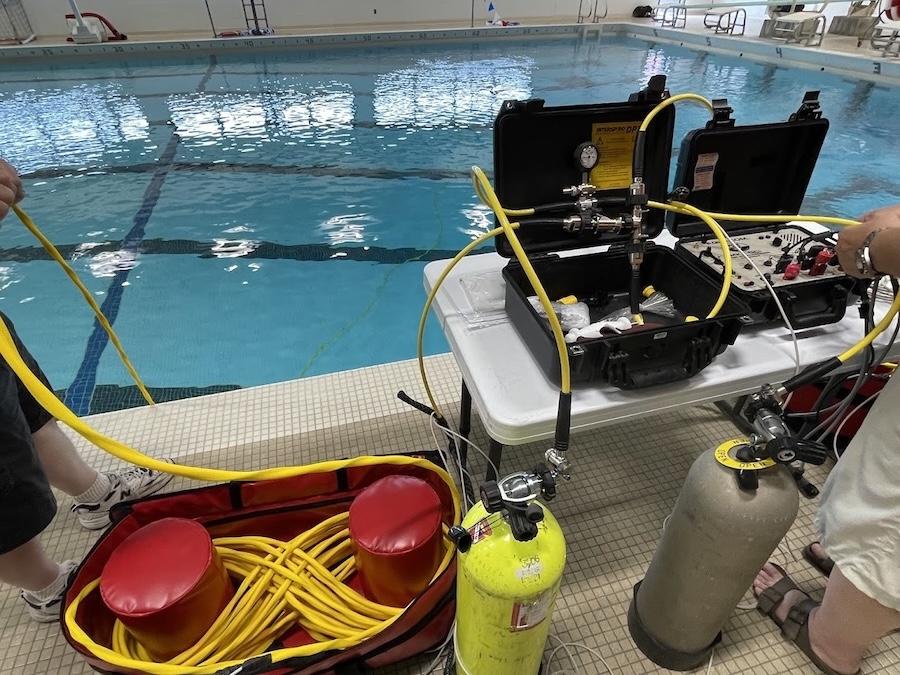
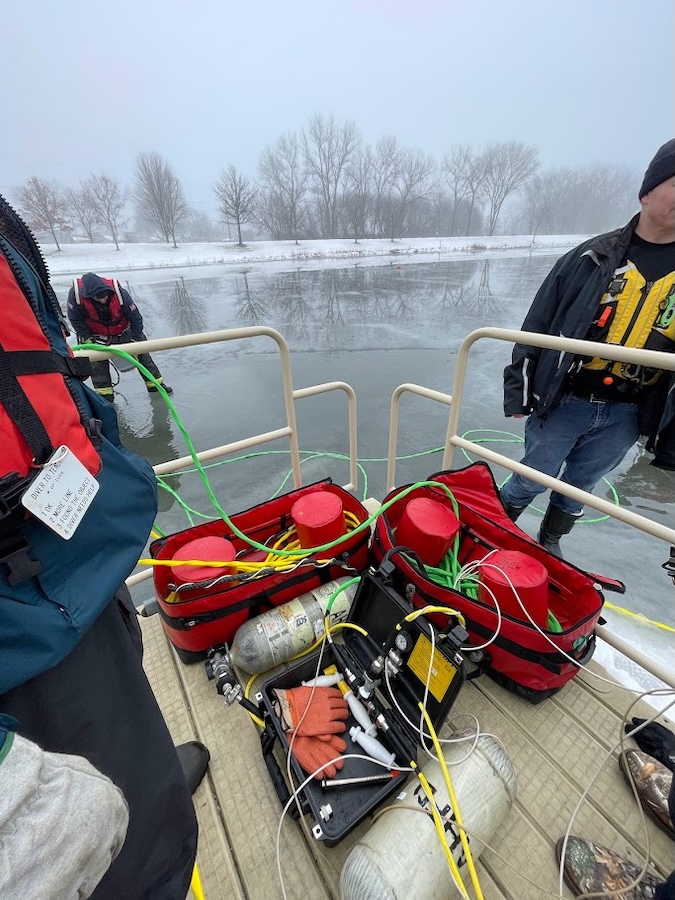
Todd emphasizes that “one of the most dangerous things responders do is breathe compressed air at depth in zero visibility. The number one risk in diving is running out of air. That reality is fueling renewed interest in lightweight surface-supplied air systems and redundant breathing platforms adapted from commercial diving, systems that provide continuous air from the surface and reduce the risk of depletion.”
Funding, of course, is still a challenge. Federal grants continue to support underwater search- and-rescue technologies, but competition is intense. That’s where my role at Scuba.com comes in, helping departments navigate contract pricing, tax-exempt purchasing, and streamlined procurement pathways so they can access critical technology without unnecessary barriers.
Fire Rescue Dive Teams: Operational Circumstances
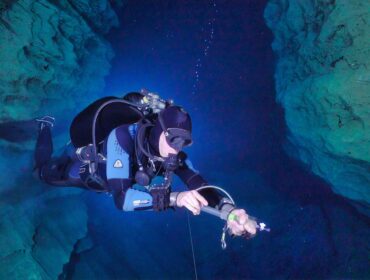
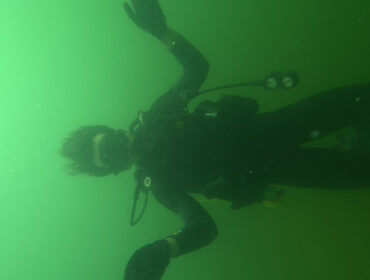
Public safety dive teams operate in some of the most hazardous conditions in the fire service. Zero visibility alone changes everything. Add contamination, entanglement risks, vehicle extrication, and physiological stress, and the margin for error becomes razor thin.
According to Todd, public safety diving is the “white elephant” in U.S. regulation. “It’s highly specialized, high-risk, but without a unified national standard. That gap makes equipment selection even more critical,” he explains.
Today’s expectations are shifting toward full-face masks, hardened regulators, contamination-resistant materials, and redundant air systems able to withstand prolonged exposure to gasoline, oil, and polluted water. Dive teams are no longer looking for incremental improvements. They’re looking for durability, survivability, and defensibility.
Imaging, Sonar & Search Technology
Search technology is advancing rapidly, so much so that we see it fundamentally changing underwater operations.
For example, diver-worn sonar integrated into full-face masks now allows surface teams to view live sonar and camera feeds. In some systems, topside operators can transmit diagrams or instructions directly to the diver. That level of coordination shortens search times and improves accuracy.
In many scenarios, ROVs or drones are deployed before a diver enters the water. If technology can locate a vehicle or confirm an area is clear, diver exposure decreases significantly.
But integration is key. “Sonar, communications, and breathing systems must work together seamlessly,” Todd point s out. “Departments should think beyond individual purchases and evaluate how each system connects operationally and electronically.”
Looking Ahead to FDIC 2026
From all of this we can conclude that water response today is a full-spectrum challenge that includes flood operations, ice rescue, vehicle recovery, and contamination mitigation. As we prepare for FDIC 2026, the innovations worth watching aren’t just the most advanced; they’re the most practical in reducing human exposure while improving coordination and system reliability.
That means certified, fully integrated breathing systems; lightweight surface-supplied air platforms; real-time sonar visualization; cross-platform communication hubs; and drone-to-dive coordination.
Todd and I share the same underlying belief: technology should extend capability while shrinking risk.
Whether on the show floor or in a department’s gear locker, the goal remains simple and universal. Equip responders with systems that protect them in the harshest conditions possible, so they can complete the mission and return home safely.
This is the lens we will be bringing to FDIC this year. It is not just about what’s new, but what truly moves the needle on safety, accountability, and operational efficiency for the public safety teams we serve.
Purchasing at FDIC and Beyond
If you do make it to FDIC this year, it’s important to note that support doesn’t end at the Scuba.com booth. Public safety teams can purchase equipment directly on site, but just as importantly, they can connect with me, an account manager, or a member of the product support team to get detailed information, explore what’s new, and better understand how to navigate purchasing through Scuba.com.
With the launch of Scuba.com Solutions—our new platform built for businesses—verified government and public safety users now have instant access to exclusive savings online. Once you sign up for a free business account and are approved, it unlocks pricing that isn’t publicly advertised, including special rates and select products reserved for verified business and government users.
Account holders can shop the full product catalog online, request quotes, and connect directly with a dedicated account manager for ordering assistance, product guidance, or technical support. We want to make it easier for public safety divers to get what they need quickly and confidently. The experience is streamlined, pricing is built for them, and support is personal.
Connect with an Account Manager. Email us at govsales@scuba.com or give us a call at 800-347-2822.