Scuba diving offers new divers a gateway to explore the underwater world. However, with that excitement comes a responsibility to dive safely. Safety builds confidence and confidence makes for better dives.
Every diver must understand basic safety principles. These include how to plan dives, monitor depth and time, and respond to common emergencies. Safety also involves physical readiness and environmental awareness. When you start with good habits, they’ll follow you into every future dive.
This guide introduces essential safety knowledge for new divers. It outlines pre-dive preparations, explains dive profiles, and covers basic emergency responses. It also emphasizes the connection between your health and your safety underwater.
Pre-Dive Preparations
The best divers don’t just react to problems, they prevent them. Safety begins before your mask hits the water. Taking time to plan your dive, check your kit, and assess your physical readiness gives you the clarity and control to enjoy every moment underwater. These steps may feel basic, but they are the backbone of every safe dive – don’t ever skip them!
Plan Your Dive, Dive Your Plan
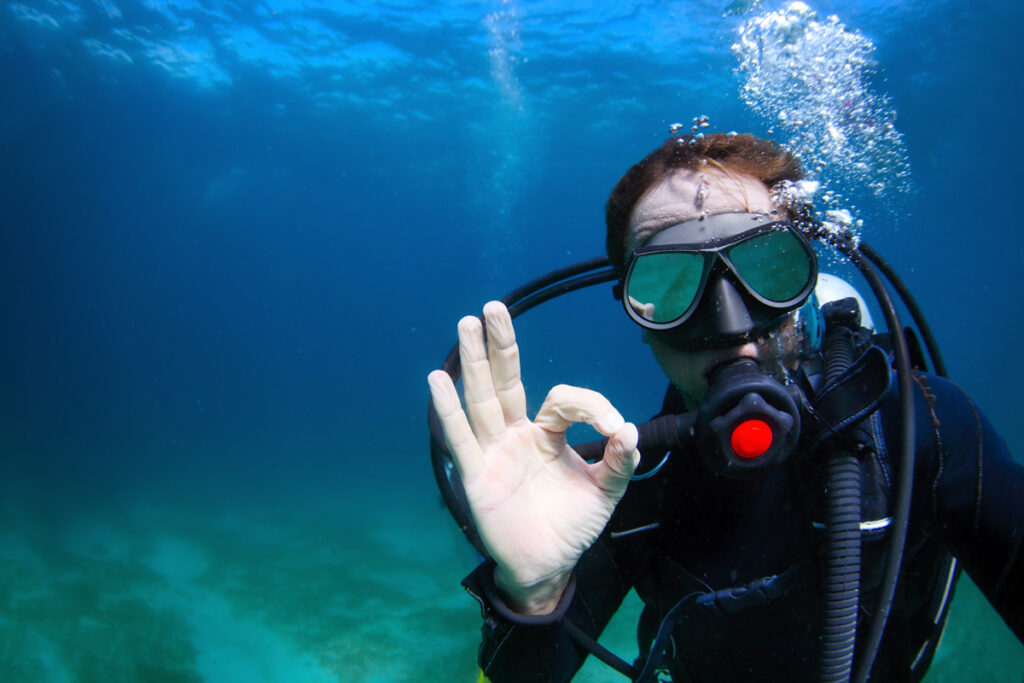
A good dive begins with a good plan. Before entering the water, you and your buddy should agree on the maximum depth, expected bottom time, route, turn-around pressure, and key signals. Discuss what to do if you get separated or if something changes underwater. This mutual understanding sets expectations and reduces the chance of miscommunication mid-dive. When you plan together, you make safer decisions together.
Buddy Checks

Even the most experienced divers rely on pre-dive checks. The BWRAF sequence – Buoyancy, Weights, Releases, Air, Final OK- is a simple and effective way to catch gear issues before they turn into problems underwater. Confirm that your inflator is working, your tank valve is open, and that you know where your buddy’s alternate air source is located.
According to Divers Alert Network (DAN), 15% of reported diving incidents involved equipment issues that could have been identified during a pre-dive check. Taking a few extra minutes on the surface can prevent stress, confusion, or even full-blown emergencies later on.
Assess the Conditions
No matter how much planning you’ve done, conditions on the day can still affect your safety. Look at the water: Is there surf, strong current, or poor visibility? Check marine forecasts online or mobile apps and listen to local dive briefings. Even experienced divers adjust or cancel dives if conditions don’t feel right. It’s not about being brave, it’s about being smart.
Prioritize Your Body
Your body is your most important piece of dive gear. If you’re tired, dehydrated, or unwell, your risk of problems like narcosis, barotrauma, or decompression sickness increases. According to DAN, cardiovascular issues are the most common cause of fatal dive accidents, especially among divers over 40.
It’s key to make sure you’re hydrated, have eaten appropriately, and feel mentally focused. Avoid alcohol and medications that impair alertness. If something feels off, trust your instincts – it’s always okay to call the dive.
Dive Tables and Computers: Know Your Limits
Depth and time are two of the most important variables in scuba diving, and both directly affect your safety. Staying within your no-decompression limits helps you avoid one of the most serious risks in diving: decompression sickness (DCS). Whether you’re using traditional dive tables or a modern dive computer, understanding how your body absorbs and releases nitrogen is key to making safe, informed decisions underwater.
What do Dive Tables Teach You?
Dive tables were once the standard tool for calculating how long you could stay at depth without requiring decompression stops. They break down dive profiles by depth and bottom time, allowing divers to plan repetitive dives with sufficient surface intervals. Learning to read a table builds your awareness of how pressure and time interact and why ascending slowly matters.
Dive tables also teach discipline. You have to stick to your plan and keep a close eye on your watch and depth gauge. For newer divers, this builds a deeper understanding of what’s happening inside your body on every dive.
If you know your planned maximum depth, you can use a dive table to work backward and figure out how long you can stay there without needing decompression stops. For example, if you plan to dive to 60 feet (18 meters), check the corresponding row on a standard table like the PADI Recreational Dive Planner. At 60 feet, your NDL is 55 minutes. That means you can spend up to 55 minutes at that depth before you must begin your ascent.
Don’t forget, if you dive deeper or stay longer, your NDL gets shorter – and if you’re planning multiple dives, surface intervals affect your limits too.
Even if you use a dive computer, learning to back-calculate NDLs helps you make better decisions when planning dives in advance or diving without a computer.
How Dive Computers Help You Dive Smarter
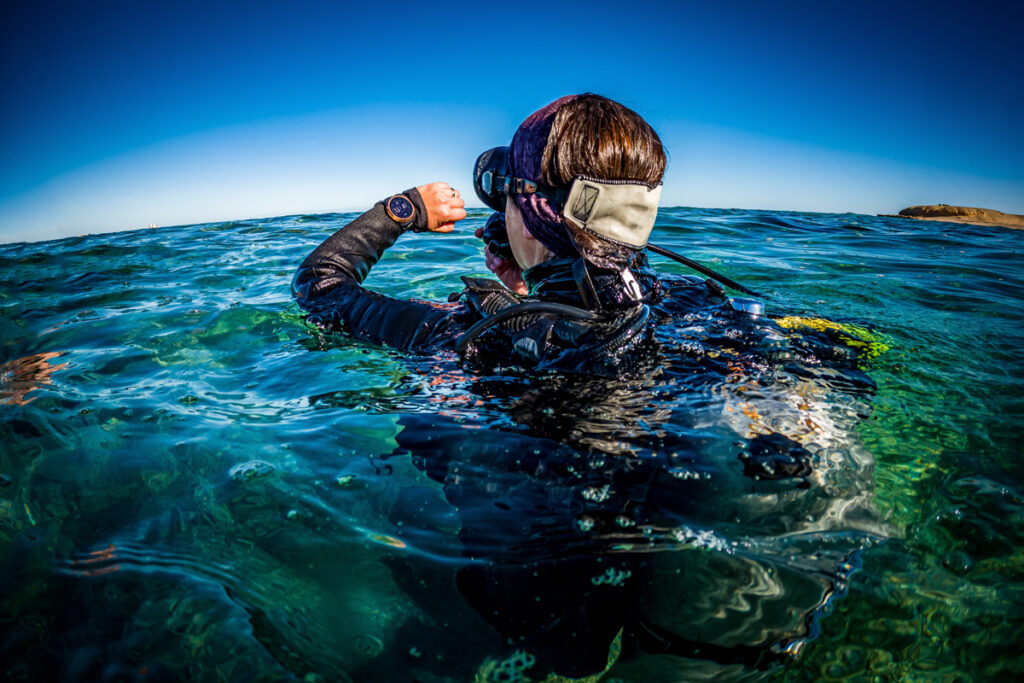
Today, most divers use a dive computer. These devices track your depth, time, and ascent rate in real time, adjusting your no-decompression limit dynamically as your dive progresses. A good computer offers built-in safety features like depth alarms, ascent rate warnings, and reminders for safety stops.
Although a dive computer does the math for you, it’s not a substitute for understanding what it’s tracking. Knowing why a no-decompression limit changes or why a slow ascent matters helps you respond appropriately when something unexpected happens. If you ever switch to a different computer, or have to dive without one, you’ll still know how to dive safely.
The Role of Safety Stops and Ascent Rates
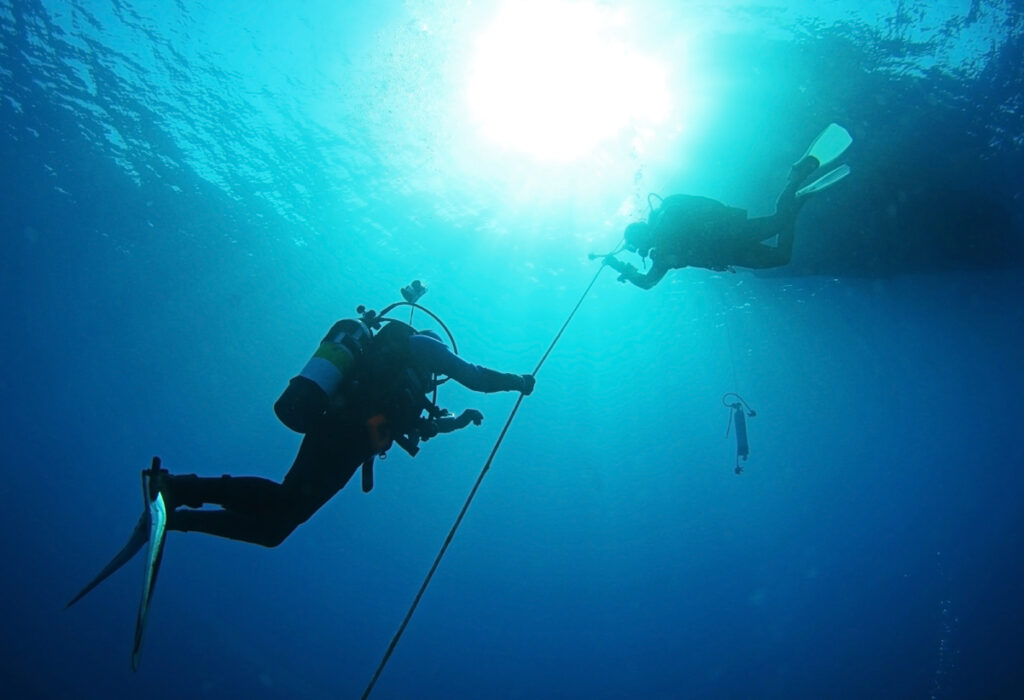
One of the simplest and most effective ways to reduce DCS risk is to make a safety stop. Pausing for three to five minutes at 15–20 feet allows nitrogen to off-gas more gradually. This is recommended on most dives – even if your computer doesn’t require it.
Always ascend slowly, at no more than 30 feet (9 meters) per minute. A fast ascent can increase your risk of DCS and lung overexpansion injuries. Your computer will usually alert you if you’re ascending too quickly, but the habit of controlling your pace should come from you, not your gear.
Emergency Procedures in Scuba Diving
Emergencies underwater don’t happen often, but when they do, your response matters. As a new diver, you don’t need to be perfect, you just need to stay calm, think clearly, and fall back on your training. That’s why it’s so important to understand and regularly practice the core skills that prepare you for the unexpected.
Air Sharing Techniques
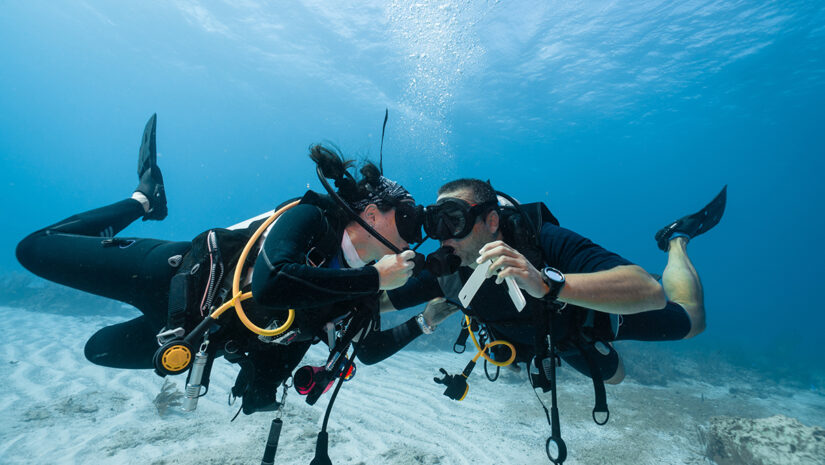
Running out of air is one of the most serious situations you can face underwater, but it’s also one of the easiest to prepare for. Knowing how to locate your alternate air source, and your buddy’s, is a skill every diver should master early. Practice donating your octopus and receiving one from a buddy in controlled conditions until it feels automatic.
In DAN’s 2020 Annual Diving Report, insufficient gas supply accounted for over 20% of reported dive accidents, often due to poor air management or delays in signaling for help. Practicing air-sharing regularly ensures you can respond confidently and without hesitation in those critical moments.
In a real scenario, you may be stressed or disoriented. But if you’ve rehearsed the movement and maintained good buddy positioning throughout the dive, you’ll be able to respond quickly and without panic. Regular refresher dives can help keep this muscle memory sharp.
Mastering Mask and Regulator Recovery
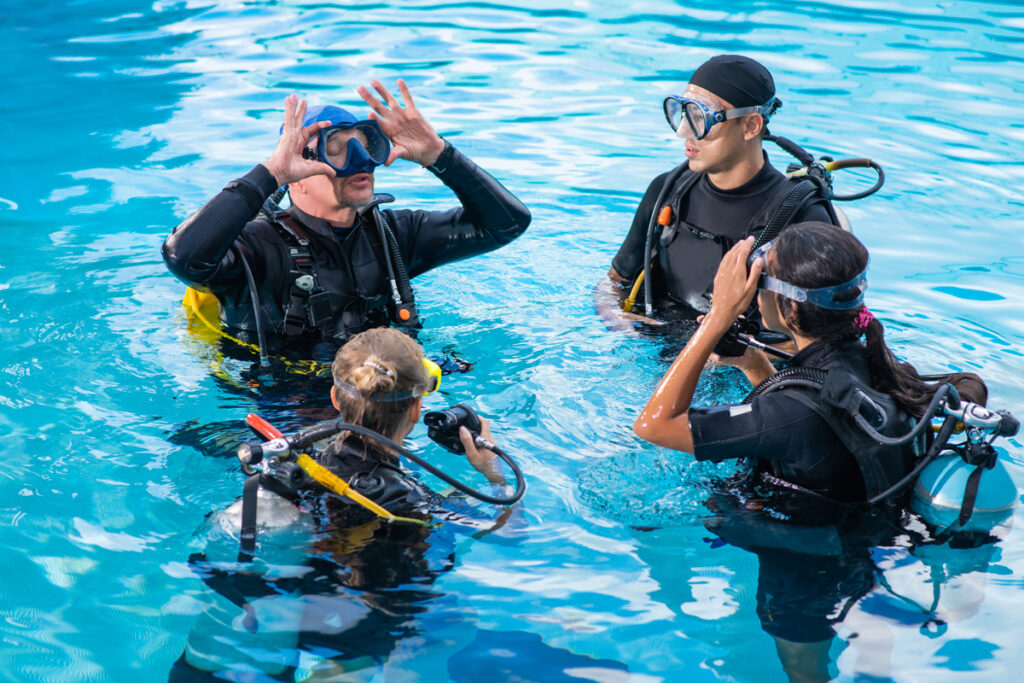
Losing your mask or regulator can feel alarming, especially on your first few dives. But these are two of the first skills taught in open water training for a reason. They’re highly manageable with practice. If your regulator gets knocked out, sweep and retrieve it calmly, then clear it using a purge or exhalation. If your mask floods or gets dislodged, resist the urge to surface, pause, clear it slowly, and carry on.
These drills aren’t just exercises – they’re confidence builders. The more you practice, the less these moments will phase you if they happen unexpectedly.
Controlled Ascents
If you need to surface quickly due to a low-air situation or other concern, your ascent must still be controlled. A Controlled Emergency Swimming Ascent (CESA) allows you to safely return to the surface while exhaling continuously to prevent lung overexpansion. It’s a last resort, but one you should be familiar with.
Your normal ascents should be equally careful. A slow, steady rise with a safety stop is one of the best ways to avoid decompression sickness. Monitor your computer, stay slightly negative until your stop, and keep breathing slowly and deeply as you go.
Lost Buddy Procedure
Getting separated from your buddy can happen, even with good planning. If it does, stop where you are, take a slow look around, and signal using your light or sound-making device. Search for no more than one minute, then begin a safe ascent to the surface, following your training. Reunite at the surface and re-evaluate the rest of the dive.
Don’t dive beyond your training or comfort zone just to stay with your buddy. Prioritize your own safety, and review buddy protocols together before each dive.
Why is your Health and Fitness Important?
Your body is your most important piece of dive gear. How you feel on land directly affects how you perform underwater. Good health supports safe diving. Poor fitness increases your risk of accidents, stress, and serious complications like decompression sickness or cardiac events.
Before you dive, you need to be physically prepared and mentally present. Pre-existing conditions like asthma, high blood pressure, or anxiety, can become serious underwater if unmanaged. That’s why training agencies and Divers Alert Network (DAN) recommend regular medical screening, especially for divers over 45 or those with cardiovascular risks.
Even minor issues like a cold or fatigue can impact your ability to equalize, control your buoyancy, or stay calm in an emergency. If you’re not feeling 100%, it’s safer to skip the dive.
Diver Tip:
Mastering the basics of dive safety isn’t about diving perfectly. It’s about preparation, awareness, and knowing how to respond when things don’t go to plan. Build safe habits early, and every dive becomes more enjoyable.
Fitness doesn’t mean being an athlete. It means having the stamina to swim against a current, the flexibility to move with ease, and the lung capacity to breathe steadily under stress. DAN has reported that inadequate physical fitness is a factor in many diving fatalities, particularly when sudden exertion is required.
The fitter and healthier you are, the more resilient and relaxed you’ll be underwater. Diving is safest when your body and mind are ready for the environment you’re entering.
Your Open Water course, and later your Rescue Diver course, will provide you with the knowledge and skills to master all of the above. Once qualified, it is important to regularly practice skills mentioned in this article in a safe environment and maybe even guided by a more experienced diver or a trained professional.
Gear Up for Safe Diving
The right equipment makes safe diving easier. From reliable dive computers and signaling devices to backup lights and surface marker buoys, investing in quality gear gives you peace of mind underwater.