When you think of whales, chances are you picture giants: blue whales stretching longer than basketball courts or humpbacks breaching in spectacular displays. But not all whales live up to the colossal image we often imagine. Some are surprisingly small, closer in size to a human than to a ship. In this blog, we’ll introduce you to five of the ocean’s smallest whale species—the little giants of the sea that prove size isn’t everything.
Why Small Whales Matter
Small whales play important roles in marine ecosystems. They feed on fish, squid, and crustaceans, helping regulate populations, while also serving as prey for larger predators like orcas and sharks. They’re vital indicators of ocean health because their survival depends on clean, healthy waters.
Unlike large whales that migrate across entire oceans, many small species live closer to shorelines, putting them at greater risk from human activity—like fishing gear, pollution, and coastal development.
Let’s dive into five of the most intriguing and smallest whale species alive today.
Dwarf Sperm Whale (Kogia sima)
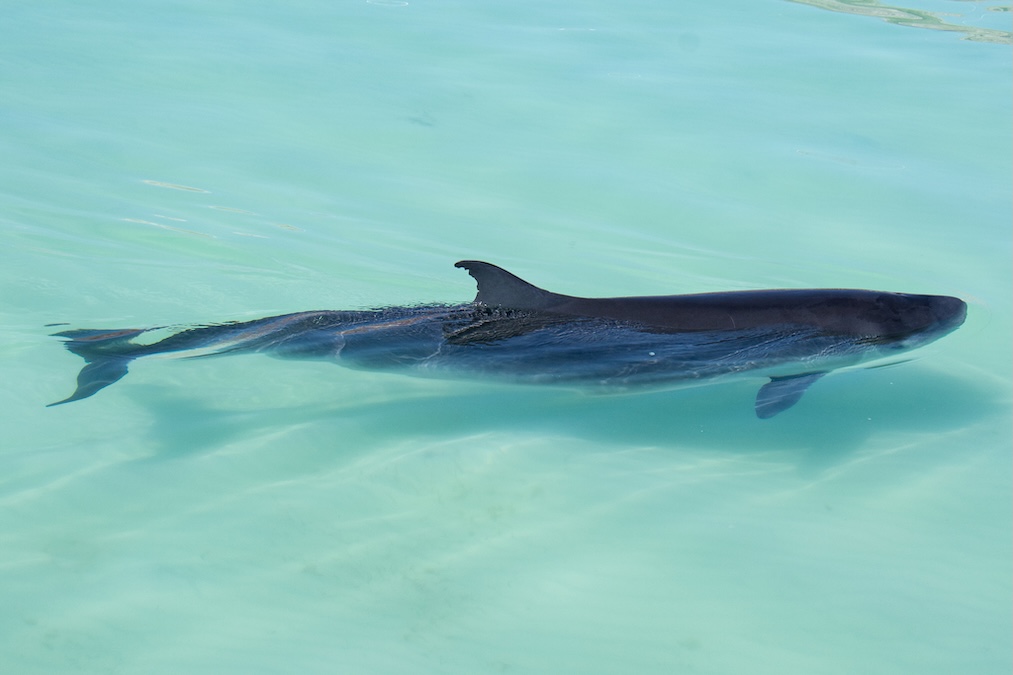
- Length: 8-9 feet (2.5-2.7 m)
- Weight: ~600 pounds (270 kg)
- Habitat: Tropical and subtropical waters worldwide
- Fun Fact: Uses a squid-like defense trick—releasing a cloud of dark fluid to escape predators.
The dwarf sperm whale looks like a miniature version of the famous sperm whale. With its blunt head, tiny dorsal fin, and small size, it’s often mistaken for a dolphin at sea.
This elusive whale spends most of its time in deep waters, feeding on squid and small fish. When threatened, it ejects a cloud of reddish-brown fluid from a sac near its intestines—a clever trick that confuses predators like sharks and orcas.
Despite being found worldwide, sightings are rare because they spend much of their lives offshore and dive for long periods. Most of what we know about them comes from stranded individuals.
Pygmy Sperm Whale (Kogia breviceps)
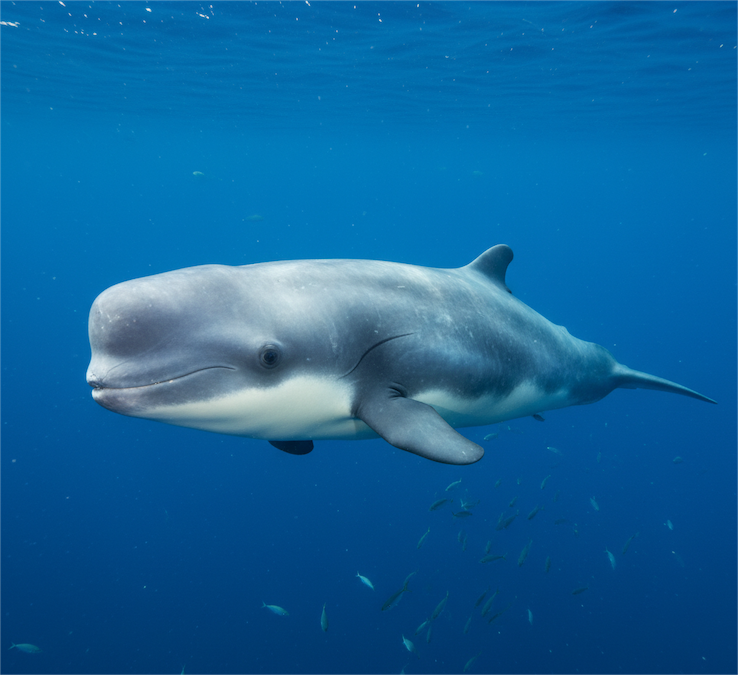
- Length: 10-11 feet (3-3.5 m)
- Weight: ~800–900 pounds (360–410 kg)
- Habitat: Deep waters of tropical and temperate oceans
- Fun Fact: Slightly larger than the dwarf sperm whale, but still tiny compared to true sperm whales.
The pygmy sperm whale is the dwarf sperm whale’s close cousin. They look almost identical, though the pygmy is slightly larger. Both belong to the genus Kogia, and both share the unusual ink-like defense mechanism.
These whales are deep divers, capable of reaching depths over 1,000 feet to hunt squid. They’re slow swimmers and generally solitary, though sometimes seen in pairs or small groups.
Like their smaller cousin, pygmy sperm whales are rarely observed at sea. Most records come from strandings, which makes studying them challenging. Yet their wide distribution suggests they’re more common than we realize—they’re just very good at hiding in the vast ocean.
Vaquita (Phocoena sinus)
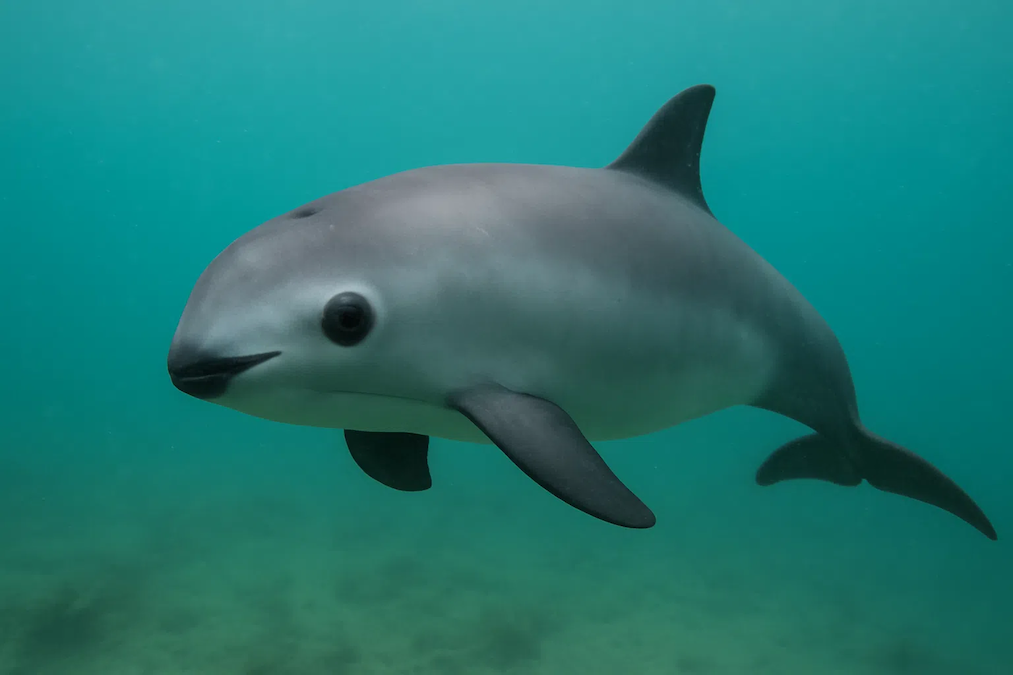
- Length: 4-5 feet (1.2-1.5 m)
- Weight: ~120 pounds (55 kg)
- Habitat: Northern part of the Gulf of California, Mexico
- Fun Fact: The rarest marine mammal in the world, with fewer than 20 individuals left.
The vaquita is not only one of the smallest whale species but also the most endangered. A type of porpoise, it lives only in a small section of the northern Gulf of California, Mexico.
Vaquitas are shy and elusive, making them hard to spot. They have dark rings around their eyes and lips, giving them a unique facial appearance. Their population has plummeted over the past decades due to bycatch in gillnets used for fishing another endangered species, the totoaba fish.
Conservation groups are racing against time to save the vaquita. With fewer than 20 individuals remaining, it may disappear within our lifetime unless drastic action is taken to protect its habitat and eliminate illegal fishing.
Hector’s Dolphin (Cephalorhynchus hectori)
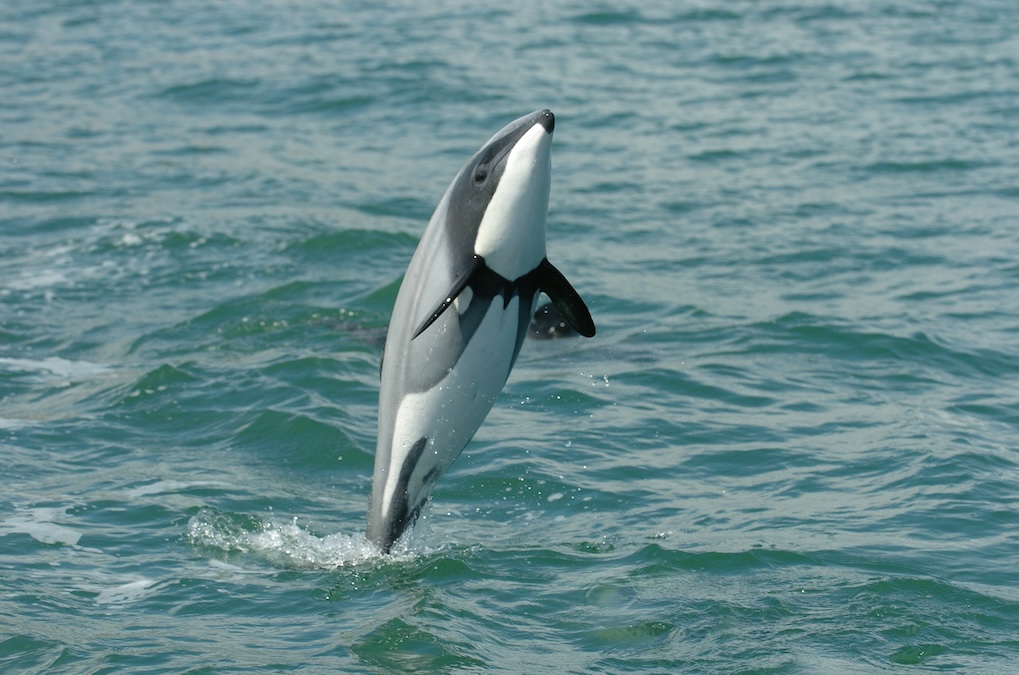
- Length: 4-5 feet (1.2-1.5 m)
- Weight: ~100 pounds (45 kg)
- Habitat: Coastal waters of New Zealand
- Fun Fact: Recognized by its rounded dorsal fin—the only dolphin species with this feature.
The Hector’s dolphin is one of the world’s smallest and rarest dolphins. Found only in New Zealand, these coastal whales are playful, social, and often seen leaping and riding waves close to shore.
Their most distinctive feature is their rounded dorsal fin, shaped almost like Mickey Mouse ears. Hector’s dolphins are divided into four subpopulations around New Zealand, and each faces threats from fishing gear entanglement, boat traffic, and habitat degradation.
Despite protections, their numbers remain low, and they are listed as endangered. Hector’s dolphins are a symbol of marine conservation efforts in New Zealand, highlighting the need for responsible coastal fishing practices.
Maui’s Dolphin (Cephalorhynchus hectori maui)
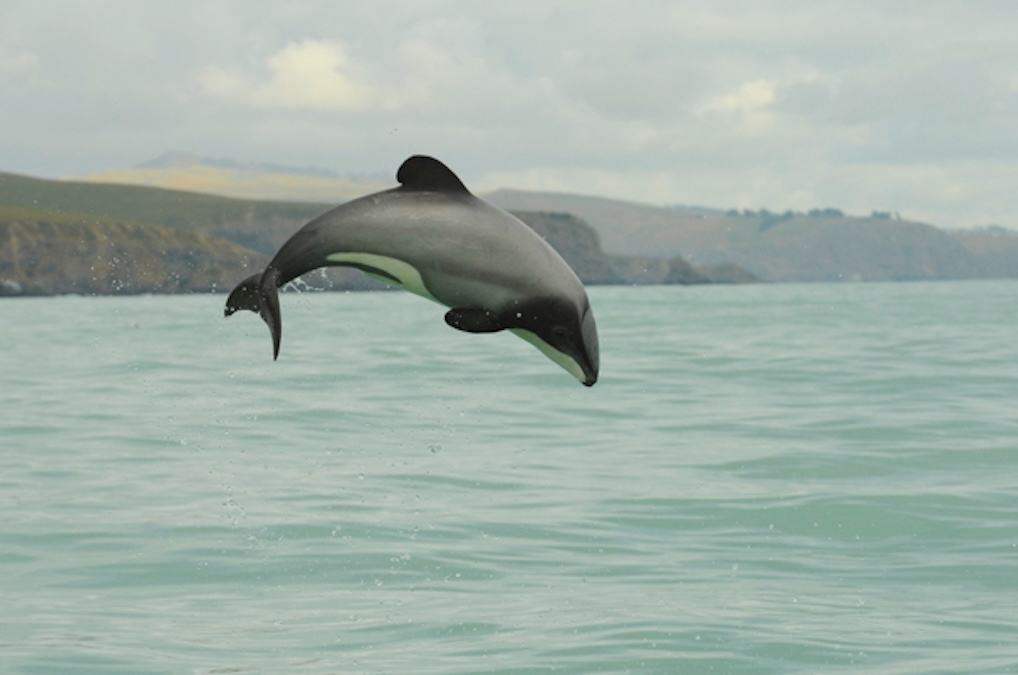
- Length: ~4 feet (1.2 m)
- Weight: ~90 pounds (40 kg)
- Habitat: West coast of New Zealand’s North Island
- Fun Fact: A critically endangered subspecies of Hector’s dolphin with fewer than 70 individuals left.
The Maui’s dolphin is a subspecies of Hector’s dolphin, restricted to just one area: the west coast of New Zealand’s North Island. They’re the smallest and rarest dolphins in the world.
Maui’s dolphins share the same rounded dorsal fin as Hector’s dolphins but are genetically distinct. Their tiny population size—fewer than 70 remain—makes them critically endangered. Conservation measures, like restricting gillnet and trawl fishing in their habitat, have been introduced, but survival depends on strict enforcement and continued protection.
Adaptations of Small Whales
Despite their small size, these whales and dolphins have evolved remarkable traits:
- Camouflage & stealth: Many are shy, elusive, and hard to spot, helping them avoid predators.
- Deep diving: Dwarf and pygmy sperm whales dive to great depths to hunt squid.
- Unique defenses: Ink-like fluid from Kogia whales is an extraordinary survival strategy.
- Social bonds: Dolphins like Hector’s and Maui’s live in groups, relying on cooperation for survival.
These adaptations show how well even the tiniest whales fit into their ecological niches.
Conservation Challenges
Sadly, small whales face some of the greatest conservation challenges of all marine mammals:
- Bycatch in fishing gear (especially gillnets) is the leading cause of death for vaquitas, Hector’s, and Maui’s dolphins.
- Habitat loss and degradation from coastal development and pollution affects species that live near shore.
- Climate change alters prey availability and ocean conditions.
- Limited range makes species like vaquitas and Maui’s dolphins extremely vulnerable to local threats.
Global awareness and local action are essential. Without intervention, two of the species on this list—the vaquita and Maui’s dolphin—could vanish in the next decade.
Why They Fascinate Us
There’s something captivating about these small whales. They’re rare, mysterious, and often overlooked in favor of larger species. Yet their survival is just as critical to the ocean’s health.
From the vaquita’s tragic rarity to the dwarf sperm whale’s ink-cloud defense, each of these species tells a story of adaptation and struggle in the marine world. They remind us that conservation isn’t just about protecting giants—it’s also about saving the little ones.
Final Thoughts
The ocean is home to both the largest animals ever to live and some of the smallest whale species you could imagine. The dwarf sperm whale, pygmy sperm whale, vaquita, Hector’s dolphin, and Maui’s dolphin may be tiny compared to blue whales, but they are giants in terms of their ecological and cultural significance.
Protecting them requires urgent action—limiting bycatch, preserving habitats, and raising global awareness. In doing so, we not only save these remarkable species but also ensure healthier oceans for all marine life.
Because in the end, whether a whale is 100 feet long or just 4 feet long, its place in the ocean matters.
FAQs About the Ocean’s Smallest Whale Species
The dwarf sperm whale (Kogia sima) is often considered the smallest true whale, averaging 8-9 feet in length and weighing around 600 pounds.
The vaquita (Phocoena sinus) is a porpoise, part of the whale family Cetacea. Though very small—about 4-5 feet long—it is still classified as a small whale species.
The pygmy sperm whale (Kogia breviceps) grows to about 10-11 feet long and can weigh up to 900 pounds, making it slightly larger than the dwarf sperm whale.
Hector’s dolphin is native to the coastal waters of New Zealand and is known for its rounded dorsal fin and playful behavior.
Maui’s dolphin, a subspecies of Hector’s dolphin, has fewer than 70 individuals left due to fishing gear entanglement, habitat loss, and slow reproduction rates.