
5 Smallest Shark Species: Tiny Predators of the Deep

5 Smallest Shark Species: Tiny Predators of the Deep

Written by Samir Parekh
|
Published on February 6, 2026
5 Smallest Shark Species featured photo

When most people think of sharks, the image that comes to mind is a large, fearsome predator like the great white or tiger shark. But not all sharks fit this stereotype. Some of the smallest shark species in the world are no bigger than a human hand, and they live in the hidden depths of our oceans, rarely seen by humans.

These miniature sharks may not inspire the same level of fear as their larger cousins, but they are no less fascinating. With unique adaptations like bioluminescence, specialized hunting habits, and elusive lifestyles, the smallest shark species remind us just how diverse and mysterious the ocean can be.

In this blog, we’ll explore the five smallest sharks in the world — species that break the mold of what most people imagine when they hear the word “shark.”

Why Small Sharks Matter

Small sharks play an important role in the ocean ecosystem. They may not dominate the food chain like large apex predators, but they are crucial for maintaining balance in marine life. Many of these sharks feed on small fish, squid, and crustaceans, helping regulate populations. At the same time, they serve as prey for larger sharks and marine mammals.

What makes these species even more intriguing is how little we know about them. Because they live in deep or hard-to-reach waters, they’re rarely studied in detail. New discoveries about their biology, distribution, and behavior continue to surprise scientists.

What are the smallest sharks?

Let’s dive into the details of these tiny predators.

Dwarf Lanternshark (Etmopterus perryi)

Dwarf Lanternshark (Etmopterus perryi)
  • Average size: 6-8 inches (15-20 cm)
  • Habitat: Deep waters off the coasts of Colombia and Venezuela
  • Notable feature: Bioluminescence

The dwarf lanternshark holds the title of the smallest shark in the world. Measuring just about the length of a pencil, this shark was first discovered in 1964 in the Caribbean Sea.

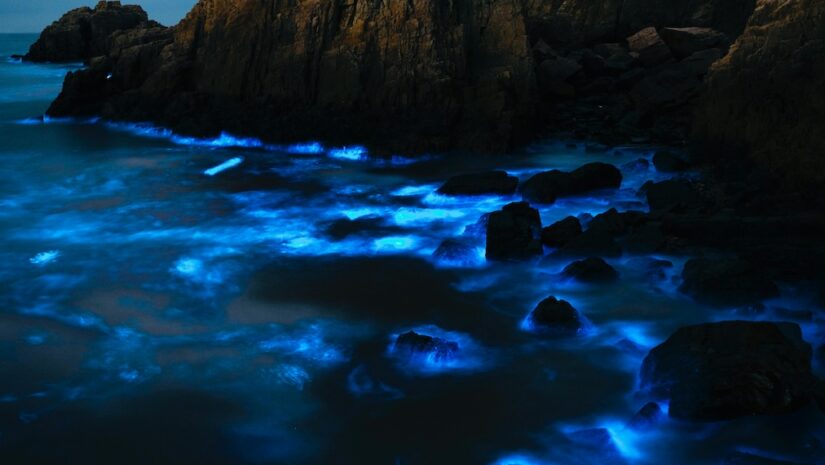
Its name comes from its incredible ability to glow in the dark. The shark has special light-producing organs called photophores along its belly and fins. Scientists believe this bioluminescence helps the shark with camouflage by countershading — when viewed from below, its glowing belly blends with sunlight filtering through the water, making it nearly invisible to predators and prey.

Despite its small size, the dwarf lanternshark is a predator. It feeds on tiny fish and invertebrates, using sharp teeth to grab its meals. Because of its rarity and deep-sea habitat, very little is known about its behavior or population numbers.

Spined Pygmy Shark (Squaliolus laticaudus)

Spined Pygmy Shark (Squaliolus laticaudus)
  • Average size: 7-8 inches (18-21 cm)
  • Habitat: Deep waters of the Atlantic, Indian, and Pacific Oceans
  • Notable feature: Sharp dorsal fin spine

The spined pygmy shark is another deep-sea species and one of the smallest sharks known to science. Unlike many other small sharks, it has a distinctive defensive feature: a sharp spine located in front of its dorsal fin. This spine likely deters predators from attempting to swallow it.

Like the dwarf lanternshark, the spined pygmy shark can also produce light through photophores. These glowing organs are scattered across its body and are thought to confuse predators and attract prey.

This shark is widely distributed across tropical and subtropical waters, though it is rarely caught. Researchers have found it at depths between 200 and 500 meters, but it may dive much deeper.

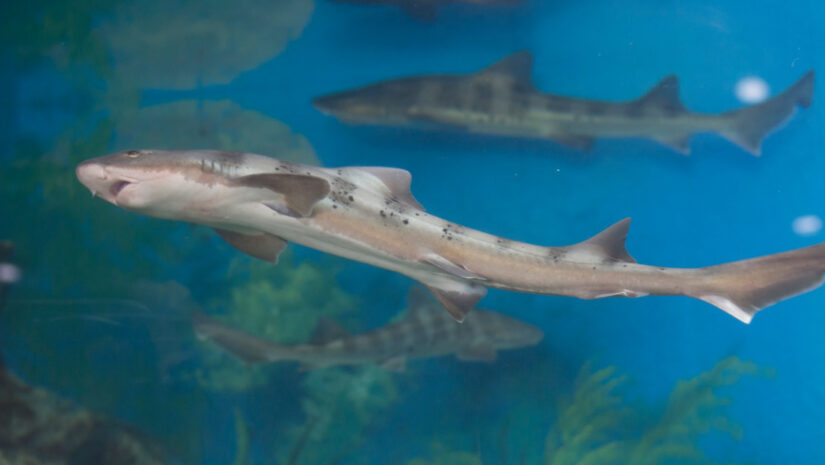
Pygmy Ribbontail Catshark (Eridacnis radcliffei)

Pygmy Ribbontail Catshark (Eridacnis radcliffei)
  • Average size: 6-9 inches (16-22 cm)
  • Habitat: Indian Ocean, especially around India and the Philippines
  • Notable feature: Long, slender tail

The pygmy ribbontail catshark looks very different from the lanternsharks and pygmy sharks. It belongs to the catshark family, which is known for slender bodies, elongated tails, and distinct dorsal markings in some species.

This shark inhabits continental shelf areas in the Indian Ocean, usually between 200 and 700 meters deep. It feeds mainly on small bony fishes and invertebrates. Unlike the lanternsharks, the pygmy ribbontail catshark does not glow in the dark, but its streamlined body and long tail make it a swift swimmer.

Interestingly, this shark is sometimes caught as bycatch in deep-sea fisheries. However, its small size means it’s not commercially valuable, and it usually gets discarded. Because of this, population data is limited, and conservation status remains uncertain.

Smalleye Pygmy Shark (Squaliolus aliae)

Smalleye Pygmy Shark (Squaliolus aliae)
  • Average size: 8-9 inches (20-23 cm)
  • Habitat: Deep tropical waters of the Pacific and Indian Oceans
  • Notable feature: Tiny eyes relative to body size

The smalleye pygmy shark is closely related to the spined pygmy shark but differs in several ways. Most notably, it has proportionally smaller eyes, which is unusual for a deep-sea fish. Many deep-sea creatures evolve large eyes to capture more light in the darkness, but this shark took a different evolutionary path.

The smalleye pygmy shark also has photophores that allow it to glow in the dark, similar to the dwarf lanternshark and spined pygmy shark. Scientists believe this feature helps it hunt and avoid predators in the dim light of the mesopelagic zone (also called the twilight zone).

Because of its elusive lifestyle, very few specimens have been collected, and almost nothing is known about its reproductive habits or population.

Green Lanternshark (Etmopterus virens)

Green Lanternshark (Etmopterus virens)
  • Average size: 10-12 inches (25-30 cm)
  • Habitat: Western Atlantic, Gulf of Mexico, Caribbean
  • Notable feature: Glowing green photophores

The green lanternshark is the largest species on our list, but still only reaches about 10–12 inches — smaller than a standard ruler. Like its relative, the dwarf lanternshark, this species can emit light from its body. Its glowing green photophores are especially striking and give the species its name.

Found in the deep waters of the western Atlantic, particularly in the Gulf of Mexico and Caribbean, the green lanternshark is relatively more studied than some of the other tiny sharks. Scientists have observed that it forms small schools and likely uses bioluminescence for group communication as well as camouflage.

Its diet consists mainly of small squid and fish, and it is occasionally caught as bycatch in deep-sea fisheries.

Adaptations That Help Them Survive

Although these sharks are small, they have evolved fascinating adaptations to survive in their extreme environments:

  • Bioluminescence: Used for camouflage, attracting prey, and communication.
  • Small size: Allows them to hide from predators and survive with minimal energy needs.
  • Deep-sea habitat: Living at great depths protects them from many threats found in shallower waters.

These features show that even the smallest sharks are perfectly designed for their ecological niche.

Conservation Concerns

One of the biggest challenges in protecting small shark species is that so little is known about them. Many live in deep-sea environments that are hard to study. As a result, scientists often don’t have enough data to assess their conservation status.

However, there are growing concerns about the effects of deep-sea fishing and climate change. Because these sharks are often caught unintentionally as bycatch, their populations may be declining without us even realizing it. Protecting deep-sea habitats is critical to ensuring these unique species continue to thrive.

Why The Smallest Sharks Fascinate Us

Tiny sharks like the dwarf lanternshark or smalleye pygmy shark remind us of nature’s endless creativity. They may not inspire blockbuster movies or shark-diving adventures, but their adaptations are just as remarkable. From glowing in the dark to surviving in crushing deep-sea pressure, these species show us how life can thrive in even the harshest conditions.

In a way, their small size makes them even more intriguing. After all, sharks are often thought of as giants of the sea. These little species flip that idea upside down, proving that being small doesn’t mean being insignificant.

Final Thoughts

The world of sharks is far more diverse than the great whites and hammerheads most people recognize. The five smallest shark species — the dwarf lanternshark, spined pygmy shark, pygmy ribbontail catshark, smalleye pygmy shark, and green lanternshark — each reveal something unique about life in the ocean’s depths.

Though tiny in size, they play important ecological roles and showcase adaptations that are nothing short of extraordinary. As research continues and deep-sea exploration advances, we’re sure to uncover even more about these miniature marvels of the shark world.

So next time you think of sharks, remember: they don’t all have to be big to be fascinating. Some of the most incredible species are the ones that could fit in the palm of your hand.

FAQs About the Smallest Shark Species

What is the smallest shark in the world?

The smallest shark in the world is the dwarf lanternshark (Etmopterus perryi), which grows only 6-8 inches long.

Are there sharks that glow in the dark?

Yes. Species like the dwarf lanternshark, spined pygmy shark, smalleye pygmy shark, and green lanternshark have bioluminescent organs that allow them to glow.

Where do the smallest sharks live?

Most tiny sharks live in deep-sea habitats across the Atlantic, Pacific, and Indian Oceans, often at depths between 200 and 700 meters.

What do small sharks eat?

They mainly feed on small fish, squid, and crustaceans, playing an important role in regulating ocean ecosystems.

Why are small sharks important?

Small sharks help maintain balance in marine ecosystems, serve as prey for larger species, and showcase unique adaptations like bioluminescence.

Samir-Parekh-profile500

Samir Parekh

Samir is an adventure sports enthusiast and loves seeking new challenges. Apart from being a regular tennis player, he is an avid skier, a paragliding pilot and often takes off to hike and trek in the mountains. His latest escapade was cycling through the rough terrains of Leh Ladakh in the summer of 2024. In […]