Imagine this scene: Murky waters. Zero visibility. Strong currents. Extreme temperatures. A disaster response rescue mission where every second counts and a life hangs in the balance. Enter the public safety divers—a special breed of professionals trained to step in where no one else dares, braving the depths to save lives and recover critical evidence.
These first responders answer the call when disaster strikes, combining expertise, bravery, and cutting-edge tools to turn chaos into hope. But what challenges do they face, and how can we better support this life-saving work as safely and effectively as possible?
This article explores their pivotal role in disaster response and the steps needed to empower them further.
The Challenges Beneath the Surface
Public safety divers operate under extreme and perilous conditions that challenge their physical and mental resilience. A myriad of factors make their missions particularly demanding, necessitating not only specialized training but also effective equipment and collaborative infrastructure to enhance safety.
Limited Visibility
One of the foremost challenges is the severely limited visibility in murky and debris-laden waters typically found in disaster zones. The turbidity caused by debris can obscure both the divers’ vision and the structural details of underwater environments, hindering navigation. As noted by Jóźwiak et al. (2015), the unpredictable underwater landscape in disaster scenarios can exacerbate risks associated with diver disorientation, complicating rescue and recovery efforts.
Contaminated Environments
Public safety divers frequently encounter environments contaminated with hazardous materials, including chemicals and debris. This exposure poses significant health risks, including chemical burns and long-term illness. The research by Lechner et al. details various medical complications tied to exposure in these environments, indicating a critical need for personal protective equipment and health monitoring during dives.
Extreme Pressure
The pressure exerted at depth can create physical stressors that require divers to maintain precision and focus. Increased water pressure can lead to barotrauma and decompression sickness, conditions that necessitate rigorous safety protocols to ensure the well-being of public safety divers. Also, physiological responses triggered by pressure changes can impact decision-making during critical missions, underscoring the importance of rigorous training to prepare for these eventualities.
Uneven Training
Diver certification and training can vary significantly across different agencies and organizations, resulting in disparities in proficiency. Inconsistent training practices can degrade response effectiveness in mission-critical situations. The insights from safety culture assessments in these agencies indicate a pressing need to standardize training protocols to elevate overall diving safety standards.
Chaotic Collaboration
During large-scale disaster response operations, effective communication and coordination among various agencies are paramount. Miscommunication can lead to disorganized responses, which can adversely affect mission outcomes. These logistical challenges underscore the importance of establishing clear command structures and communication protocols prior to engaging in complex rescue operations.

Professionalism Below and Above the Waterline
Public safety teams play integral roles in disaster response, encompassing a wide range of responsibilities that extend beyond just underwater missions. Their multifaceted duties are vital for ensuring public safety and effectiveness during critical events, highlighting the professionalism and dedication required in these high-stakes environments.
Rescue Operations
One of the responsibilities of public safety teams is conducting rescue operations, such as rescuing survivors from submerged vehicles and navigating hazardous waters. Maintaining high levels of preparedness and quick access to proper equipment is essential for practical rescue efforts. As noted in different studies, operational efficiency during disasters often hinges on pre-established tactics and teamwork, where effective communication is paramount to coordinating rescue actions.
Search and Recovery
Furthermore, public safety teams actively engage in search and recovery missions to locate missing persons or recover critical evidence—a task that often demands precision and coordination. The complex dynamics of disaster environments necessitate a collaborative approach among diverse disciplines, as illustrated by Sássi et al. (2021). Enhanced training in disaster response navigation further enables these efforts.
Structural Assessments
Evaluating submerged infrastructure, such as bridges, is another critical function for disaster response teams. These assessments are vital for ensuring public safety and returning to normalcy after disaster events. Structural integrity checks performed by trained teams help mitigate risks associated with compromised infrastructure. Efficient logistics and specialized knowledge are essential for effective assessments, enabling responders to identify hazards promptly.
Disaster Mitigation
In addition to reactive measures, public safety teams are involved in disaster mitigation efforts, including flood relief operations and addressing environmental impacts. Comprehensive training in disaster preparedness equips public safety operations with vital competencies, enabling teams to balance immediate response needs with strategic planning for future disasters, as noted by Nagata et al. (2023) and Hashemipour et al. (2018).
Despite their life-saving contributions and the potential for significant societal impact, the work of public safety teams often goes unnoticed. These professionals operate with quiet courage under some of the most treacherous conditions imaginable, reflecting a commitment to public safety that deserves greater recognition across communities and organizations alike.
The Tools That Make it Possible
Having the right gear is non-negotiable in disaster response and aquatic rescue missions. Public safety dive teams depend on top-tier tools, such as:
- Rapid Deployment Kits: This type of scuba gear is essential for emergencies, packed with cutting devices, emergency markers, and other critical tools.
- Personal Flotation Devices (PFDs): PFDs are vital for buoyancy and protection in unpredictable waters.
- Advanced Sonar Systems: Pinpoint-search capabilities that aid divers even in near-total darkness.
Every piece of scuba and ancillary safety equipment can mean the difference between success and failure in life-saving missions.
Training to Tackle the Toughest Missions
The right tools are only effective in well-trained hands. Consistent, high-quality training based on standardized protocols, like NFPA Standards 1006 & 1670, ensures public safety divers are prepared to handle the most dangerous scenarios. Critical training focuses on the following:
- Proper use of cutting-edge scuba gear, such as sonar and rapid deployment kits.
- Rescue swimming fundamentals and risk mitigation tactics.
- Effective coordination using National Incident Management System (NIMS) and Incident Command System (ICS) protocols.
- Real-world simulations that replicate disaster response to prepare scuba divers for any situation.
These standards create cohesive, efficient teams capable of saving lives even in the most chaotic environments.
Stories of Heroism
Public safety divers have repeatedly proven their mettle under extreme conditions. Here are a few examples of their courage and expertise in action:
- Potomac River Mid-Air Collision (2025): Fireboats and divers were deployed to search for victims and survivors; cold temperatures, strong winds, ice, and murky water hampered rescue efforts in one of the most devastating air disasters in U.S. history.
- Francis Scott Key Bridge collapse (2024): Divers from various agencies, including the U.S. Army Corps of Engineers, the U.S. Navy, and local fire and rescue teams, responded to search and rescue efforts, salvage operations, and assessing the damage caused by the ship strike.
- I-35W Bridge Collapse (2007): Divers carefully navigated underwater debris to recover victims and assist engineers in assessing the damaged infrastructure.
These tales are a testament to their bravery and the critical importance of their role in disaster response.
The Path Ahead for Public Safety Diving
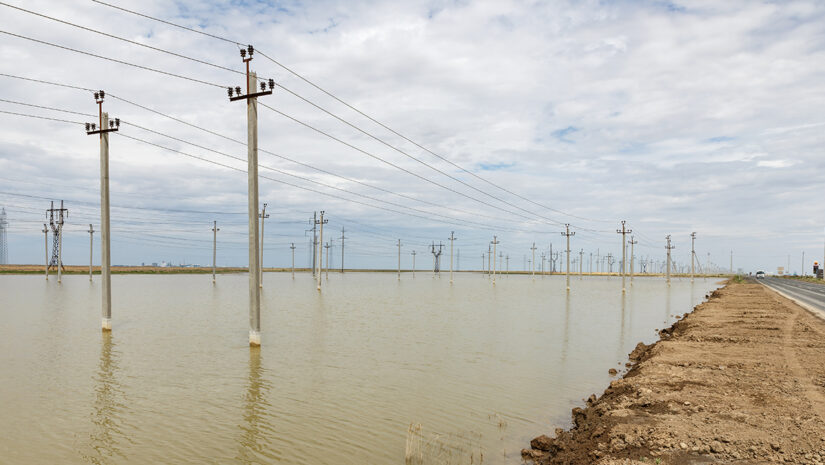
In a dynamic environment with an increasing frequency of floods and water-related disasters, the work of public safety divers will become even more essential in the coming years. To meet the challenges ahead, we must prioritize the following areas:
- Tech Innovation: State-of-the-art scuba gear, including tools like autonomous ROVs (remotely operated vehicles) and AI-driven sonar systems, can exponentially improve safety and success rates.
- Inter-agency Collaboration: Streamlining communication through NIMS/ICS-based SOPs and SOGs ensures teams work together seamlessly during high-pressure missions.
- Health & Well-being: Divers need ongoing physical health monitoring and psychological support to manage the toll of their demanding roles.
Will You Join the Mission?
Mitigating risks, staying prepared, and training hard are essential to succeeding in this vital mission. Commit to the purpose by honing your skills, sharpening your focus, and ensuring your scuba gear is always in top condition. Together, we can face every challenge head-on and make a difference where it truly matters.
If you’re an emergency response professional or organization looking to strengthen your capabilities, now is the time to act. Explore PSD training programs, discover the latest tools, and refine your disaster response strategies and tactics.
Dive confidently. Respond effectively. Save lives.
References
- National Fire Protection Association (NFPA). (n.d.). NFPA 1006: Standard for Technical Rescue Personnel Professional Qualifications. Retrieved from https://www.nfpa.org
- National Fire Protection Association (NFPA). (n.d.). NFPA 1670: Standard on Technical Rescue Operations. Retrieved from https://www.nfpa.org
- Divers Alert Network (DAN). (n.d.). Public Safety Diving: Best Practices and Safety Guidelines. Retrieved from https://dan.org/alert-diver/article/public-safety-diving/
- United States. Department of Homeland Security. (2011). National Incident Management System training program. [Washington, D.C.]: Dept. of Homeland Security,
- Technical Diving International (TDI). (n.d.). Equipment Considerations for Public Safety Diving Missions. Retrieved from https://www.tdisdi.com
- Jóźwiak et al.; Analysis of the risk of diving accidents in military and recreational diving; Polish hyperbaric research (2015) doi:10.1515/phr-2015-0022
- Lechner et al. ;Otorhinolaryngology and Diving—Part 1: Otorhinolaryngological Hazards Related to Compressed Gas Scuba Diving ;JAMA otolaryngology–head & neck surgery (2018) doi:10.1001/jamaoto.2017.2617
- Kovacs; Scuba diving and the stress response: considerations and recommendations for professional and recreational divers; International maritime health (2023) doi:10.5603/imh.91707
- Beatty et al.;Physiological monitoring to prevent diving disorders ;Frontiers in physiology (2024) doi:10.3389/fphys.2024.1517361
- Lucrezi et al.; Safety Priorities and Underestimations in Recreational Scuba Diving Operations: A European Study Supporting the Implementation of New Risk Management Programmes; Frontiers in psychology (2018) doi:10.3389/fpsyg.2018.00383
- Mišković et al. “Guidance and control of an over actuated autonomous surface platform for diver tracking ;(2013) doi:10.1109/med.2013.6608884
- Glesner et al.; Bringing symmetry between and within safety and security cultures in high-risk organizations; Safety science (2020) doi:10.1016/j.ssci.2020.104950
Additional References
- Djalali et al.; Facilitators and obstacles in pre-hospital medical response to earthquakes: a qualitative study “Scandinavian Journal of Trauma Resuscitation and Emergency Medicine (2011) doi:10.1186/1757-7241-19-30.
- Kuday et al.; Challenges Faced by Medical Rescue Teams During Disaster Response: A Systematic Review Study; Disaster medicine and public health preparedness (2023) doi:10.1017/dmp.2023.217.
- Yanagawa et al. ;Activity of a Medical Relief Team from Shizuoka Hospital that was Dispatched to the Noto Peninsula Earthquake in Reiwa 6 (2024) “Juntendo medical journal (2024) doi:10.14789/jmj.jmj24-0006-ot.
- Ge et al.; Building an Interdisciplinary Team for Disaster Response Research: A Data‐Driven Approach; Risk analysis (2019) doi:10.1111/risa.13280.
- Sássi et al.; One Decade of Environmental Disasters in Brazil: The Action of Veterinary Rescue Teams; Frontiers in public health (2021) doi:10.3389/fpubh.2021.624975.
- Aitken et al.; Logistic support provided to Australian disaster medical assistance teams: results of a national survey of team members; Emerging health threats journal (2012) doi:10.3402/ehtj.v5i0.9750.
- Satoh et al.; Disaster Nursing Knowledge and Competencies Among Nursing University Students Participated in Relief Activities Following the 2016 Kumamoto Earthquakes; Sage open nursing (2018) doi:10.1177/2377960818804918.
- Craven; Managing anesthetic provision for global disasters; British Journal of Anaesthesia (2017) doi:10.1093/bja/aex353.
- Hashemipour et al.; A disaster multiagent coordination simulation system to evaluate the design of a first‐response team; Systems engineering (2018) doi:10.1002/sys.21437.
- Tsai and Chan; Development of Disaster Response Strategies for Multi-Disasters ;(2023) doi:10.21203/rs.3.rs-2606478/v1.
- Mcintyre and Goff; Federal Disaster Mental Health Response and Compliance with Best Practices; Community mental health journal (2011) doi:10.1007/s10597-011-9421-x.
- Power Extreme teams: Toward a greater understanding of multiagency teamwork during major emergencies and disasters; American psychologist (2018) doi:10.1037/amp0000248.