Who can forget that childhood experience with fireflies on a warm summer night? Although the illumination they produce conjures up images of magic and fairy tales, this delightful effect is a biological process called bioluminescence, created by a chemical reaction within a living organism’s body. It can be used for several purposes, including mating, hunting, camouflage, and communication. Though a firefly sighting may not be all that common in some reaches of the globe, marine bioluminescence occurs on a wide scale. It can be even more ethereal than that of its terrestrial counterparts.
Marine bioluminescence
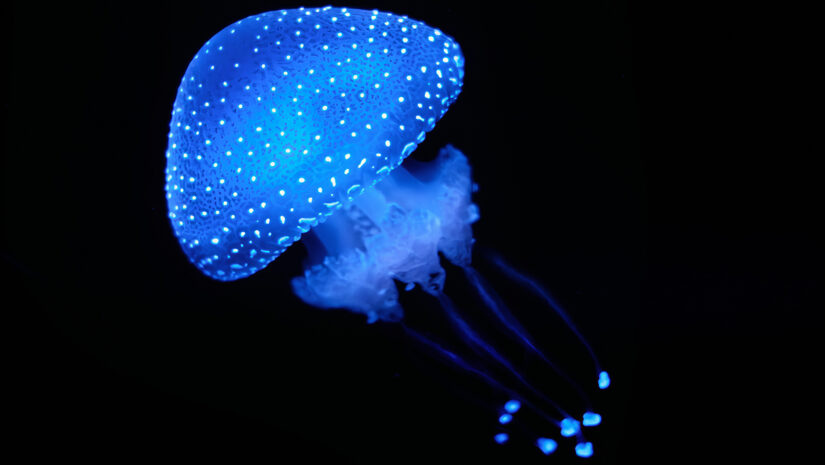
Most people are unaware that the ability of organisms to emit light is more prevalent in the ocean than on land. Marine bioluminescence is particularly common in the depths of the sea, where sunlight cannot reach. Scientists estimate that as much as 90 percent of deep-sea creatures utilize some form of bioluminescence. Marine biologists exploring these great depths in submarines often recount their encounters with the peculiar twinkling lights found far from any natural light source above. Marine bioluminescence is observed across various organisms, from algae that float near the water’s surface to multiple species of deep-sea fish and invertebrates.
An enchanting experience with marine bioluminescence can be had by paddling through salt lagoons and bays where comb jellies are migrating. Comb jellies are translucent, gelatinous creatures shaped like little footballs lined with eight rows of longitudinal cilia. Although they are similar to cnidarians, or what is commonly referred to as jellyfish, they are ctenophores. These odd, graceful creatures often display bioluminescence, creating beautiful blue-green trails in the water at night as small vessels dip their oars into the sea. If a bioluminescent alga is present, you may enjoy the rare thrill of watching your footprints glow as you walk down the beach under the inky blackness of the night sky.
The Anglerfish
One of the more fascinating examples of marine bioluminescence is found in deep-sea anglerfish. These excellent fish have an elongated appendage protruding from their heads, complete with a bioluminescent tip. When the illuminated tip flashes, it lures the prey closer to its awaiting jaws under cover of darkness, and before the victim has a chance to realize it’s a trap, the anglerfish swiftly snaps it up. The anglerfish is just one incredible example of life adapting to its environment in the most clever ways.