New divers should be congratulated and encouraged in their newfound sport. Plenty of people in the world have no way; how are they ever getting into that deep blue sea and looking around? For many new divers, conquering the fear of the unknown and breathing underwater is monumental enough. Still, other fears often creep in as they learn more about the underwater world and the art of SCUBA diving. Here are three common diving fears. Knowing you’ve got this, we’ll do our best to ensure you walk away from these fears.
Decompression Sickness
Decompression sickness (DCS), also known as “the bends,” is caused by dissolved nitrogen entering the bloodstream into bubbles when a diver ascends from depth. Because these bubbles can form in and travel to any place in the body, it is common for divers to feel the effects in the joints—especially the shoulders and elbows. The risk of DCS increases the more profound and longer a person dives, but a new diver will typically not be going to the depths or diving the length of time it takes for DCS to be a factor. However, dehydration, lack of sleep, and minor illnesses can all contribute to DCS, so you must take your dives seriously and get plenty of rest and hydration before you go!
Shark Attack
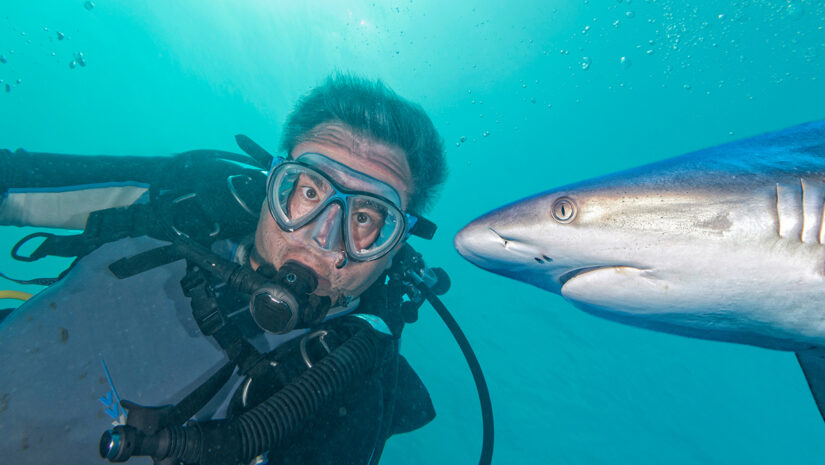
Hollywood created the exaggerated fear of sharks. It is rare for most divers to see one unless you have specifically chosen a dive where sharks are known to hang around, like the Bahamas, the Great Barrier Reef, or South Africa. If you happen to see a shark, it will typically be timid, even if it is a little curious about you. Nurse sharks, whitetip reef sharks, blacktip reef sharks, and wobbegongs are just a few examples of sharks you may be lucky to see on a reef but do not pose much risk in the way of attack. Of course, attempting to touch, pursue, or otherwise harass any marine creature, not just sharks, could result in aggressive behavior. Always respect marine life and their environment, and you face no real threat.
Running Out of Air
Running out of air is a widespread fear of most new divers, but you should have the absolute least risk if you pay attention during your training and apply what you learn. Learning to read and check your gauges as a new diver is comparable to learning to read and check your car’s gauges when you learn how to drive, the emphasis being on checking often. You should always discuss communication before a dive so you know how to let your buddy, dive master, or instructor see if you are running low on air.