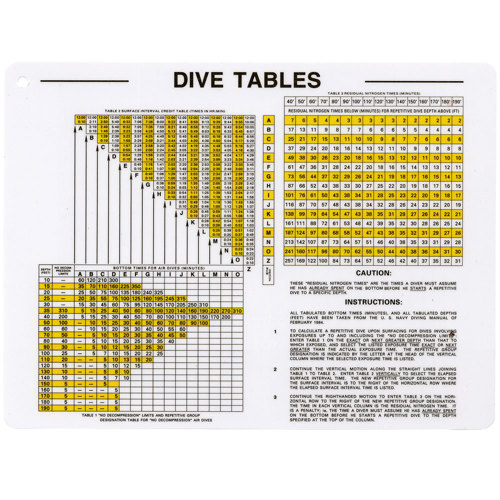
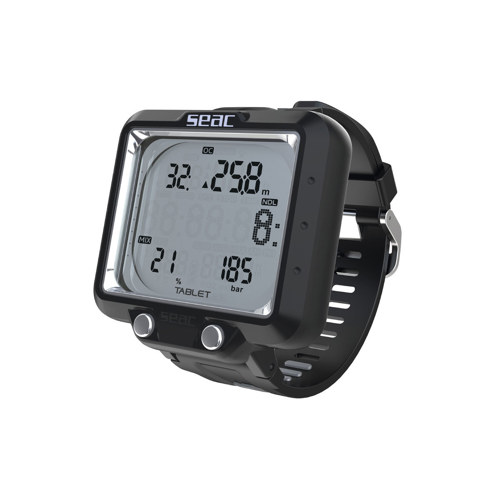
Scuba tables are an essential tool for divers of all experience levels, providing a reliable, time-tested method for planning safe and enjoyable underwater adventures. Whether you’re a seasoned instructor guiding students through their first open water experiences or a recreational diver eager to explore new depths, a scuba table offers a tactile, visual way to calculate no-decompression limits, surface intervals, and repetitive dive profiles. Unlike digital dive computers, which can sometimes feel impersonal or overwhelming with their constant beeping and scrolling screens, a physical scuba table allows you to slow down, engage with the planning process, and truly understand the logic behind dive safety. Many divers find that using a table before a dive helps them internalize the rules of decompression theory, reinforcing good habits and building confidence. In the cooler months of February, when many divers are either planning trips to warmer waters or reviewing their skills in preparation for the upcoming dive season, having a set of scuba tables on hand can be invaluable for refresher courses or pool sessions.
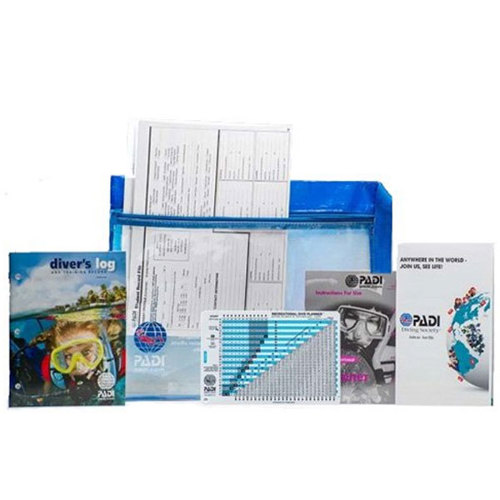
For those shopping for a thoughtful gift, scuba tables make a practical and meaningful present for anyone in your diving circle. New divers often receive them as part of their certification courses, but having a personal, well-made table is always appreciated—especially when it comes with a protective sleeve or a compact, travel-friendly design. Experienced divers, too, value the reassurance and backup that a physical table provides, especially when exploring remote locations where batteries can die or electronics might fail. Dive instructors and divemasters often keep extra tables in their gear bags to lend to students or to use as teaching aids during briefings. There’s a sense of tradition and camaraderie in flipping through a scuba table together before a dive, tracing your finger along the charted depths and times while discussing the day’s plan. These moments are part of what makes diving such a rich and communal experience—sharing knowledge, looking out for one another, and embracing the adventure with respect for the limits that keep us safe.
When choosing a scuba table, it’s important to consider factors like clarity of markings, durability, and compatibility with the dive profiles you expect to encounter. Some divers prefer color-coded tables for quick reference, while others appreciate extra details like altitude adjustments or nitrox compatibility. Laminated designs are popular for their resilience against saltwater and rough handling, and compact formats can slip easily into a logbook or BC pocket. As you browse options, think about your own diving style and the environments you frequent—whether it’s the chilly kelp forests off the coast, vibrant coral reefs in the tropics, or freshwater lakes closer to home. For those interested in the mathematical side of dive planning, or for anyone looking to deepen their understanding of dive theory, our
Scuba Numbers page offers a deeper dive into the calculations and principles that underpin safe diving. With the right scuba table at your side, you’ll be well-equipped to plan every dive with confidence, clarity, and a sense of connection to the timeless practices of the underwater world.